
Wind farms are changing the work of bird conservationists
The work of conservationists now helps decide not only what should be protected, but where and how energy infrastructure should be built.
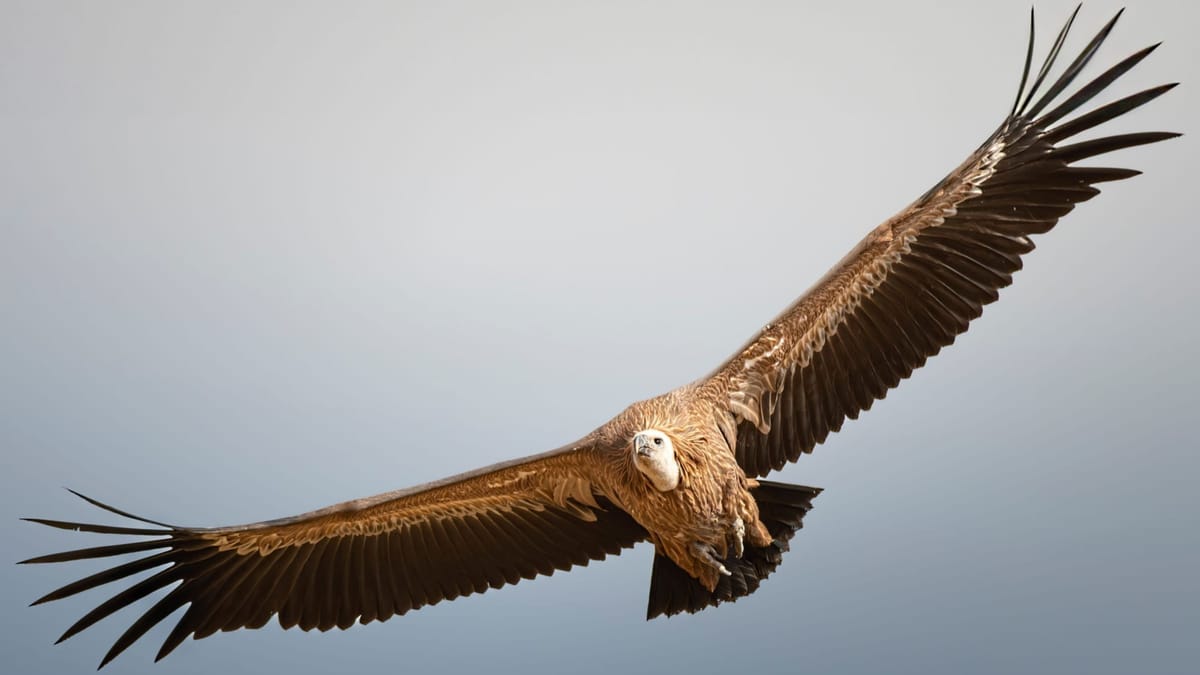
Wind farms are becoming part of the Karoo landscape, towering above ridges and open plains where strong, dependable winds can generate electricity without burning coal. The same airspace, however, is used by vultures, eagles, cranes and other birds which travel long distances or rely on rising air currents.
This has changed the work of bird conservationists. Watching and recording species is no longer enough. Specialists now study nesting territories and examine exactly where each turbine can eventually be erected. Once a wind farm begins operating, conservationists must continue checking whether their earlier predictions were correct.
The work starts before construction
Modern bird monitoring usually begins while a wind farm is still being planned. Specialists study bird-atlas records and conduct surveys across different seasons.
Observers spend hours at fixed vantage points recording which species pass through an area and which routes they follow as well as how high they fly. Particular attention is given to large birds that could enter the height swept by turbine blades.
BirdLife South Africa and Endangered Wildlife Trust recommend a step-by-step process covering preliminary screening, pre-construction surveys and monitoring during operation. The aim is to understand how birds use the landscape.
The distinction is relevant to the Karoo. A rocky ridge might look empty during an afternoon visit but could form part of an eagle’s hunting territory while an open plain could be crossed regularly by Blue Cranes or bustards.
Placement is the first line of protection
The most effective way to reduce risk is to keep turbines out of important bird areas from the beginning. Moving a proposed turbine before construction is usually easier than managing a dangerous position for the next 20 years.
Conservationists therefore identify nests, roosts, feeding sites and frequently used flight corridors. These can become no-go areas or receive protective buffers. Proposed turbines could potentially be moved away from a valley crossing or slope where birds regularly gain height.
Large circular buffers around nests are useful as a starting point, although they don't always reflect the way birds move. Research led by the University of Cape Town has helped develop more detailed models of how Verreaux’s Eagles use the landscape. UCT’s explanation of the VERA model notes that eagle territories are not neat circles. Prey and nesting position also influence where the birds fly.
This is turning wind turbine placement into a far more precise exercise, as planners must consider whether its placement is inside a regularly used section of airspace.
Why large birds cause concern
Vultures and eagles are built to travel efficiently. They use thermals and rising wind along slopes to stay airborne while spending relatively little energy. Unfortunately, these conditions can overlap with good places for turbines.
Cape Vultures can forage across thousands of square kilometres. BirdLife South Africa therefore warns that screening can't stop at the boundary of the proposed development. Colonies and feeding areas much farther away can still influence the number of vultures passing through.
Large birds also tend to live for many years and produce relatively few young. Their populations could struggle to replace repeated losses, especially when they are already affected by power lines and reduced food availability.
Verreaux’s Eagle, Martial Eagle, Secretarybird, Black Harrier and Cape Vulture are among the species receiving close attention. Jackal Buzzards are also monitored because South African studies have found them susceptible to turbine collisions.
Monitoring continues once the blades start turning
Pre-construction surveys can reduce the risk but they cannot predict everything. Birds change their routes as rainfall or food supplies vary.
Once turbines begin operating, field teams conduct searches beneath them and record any evidence of collisions. Researchers must also allow for the fact that small birds are harder to find and remains can disappear before the next search. Detection trials and scavenger-removal tests are used to produce more realistic estimates.
A major 2025 BirdLife South Africa review examined reports from 33 wind farms in the Eastern, Northern and Western Cape. Many overlapped the Nama-Karoo biome. The review recorded 202 affected bird species and calculated an average estimated mortality rate of 4.25 birds per turbine each year. More than 80% of the facilities had recorded at least one species of conservation concern.
These are national figures rather than a measurement for every Karoo wind farm. They nevertheless show why monitoring cannot become a box-ticking exercise. The results must be studied and used to change operations where necessary.
From observation to intervention
Conservationists are becoming more involved in adaptive management, which means responding when monitoring shows a problem. These measures include removing attractions close to turbines or shutting selected machines down under particular conditions.
One developing method is shutdown on demand. Trained observers or cameras are used to detect a priority bird approaching a high-risk area. The relevant turbine is stopped temporarily until the bird has moved away.
BirdLife South Africa describes the approach as promising, although its success depends on reliable detection followed by rapid communication and clear rules about when a shutdown must occur.
Wind energy and bird conservation don't have to occupy opposing camps. South Africa needs cleaner electricity, while its open terrain supports birds found in few other places. The challenge is to ensure that renewable energy is not treated as impact-free simply because it is cleaner than coal.
This means that the work of conservationists now helps decide not only what should be protected, but where and how energy infrastructure should be built.
 Mariana Balt
 Lynette Spencer
 Liz Thorne
 Anchen Coetzee

Comments ()