
There's mistletoe in this story - but it isn’t the Christmas-card kind
The Christmas sprig has symbolised the mistletoe, usually indoors and detached from the branch that fed it. The southern African story includes a bird feeding and a second plant concealed among the leaves.
The easily recognisable Christmas-card version of mistletoe has pale berries with green leaves, and a sprig suspended above potential, wandering lovers.
Viscum album is the plant most closely associated with that European tradition. Mistletoe’s romantic reputation was helped along by nineteenth-century literature, including the writing of Charles Dickens and Washington Irving. A plant growing on other plants became part of the scenery of a beloved traditional Christmas.
A much larger botanical history has become obscured by this best-known image. In fact, mistletoes occur far beyond Europe, and southern Africa has its own species, with different hosts and flowers.
One of them grows on spekboom.
A plant inside the plant
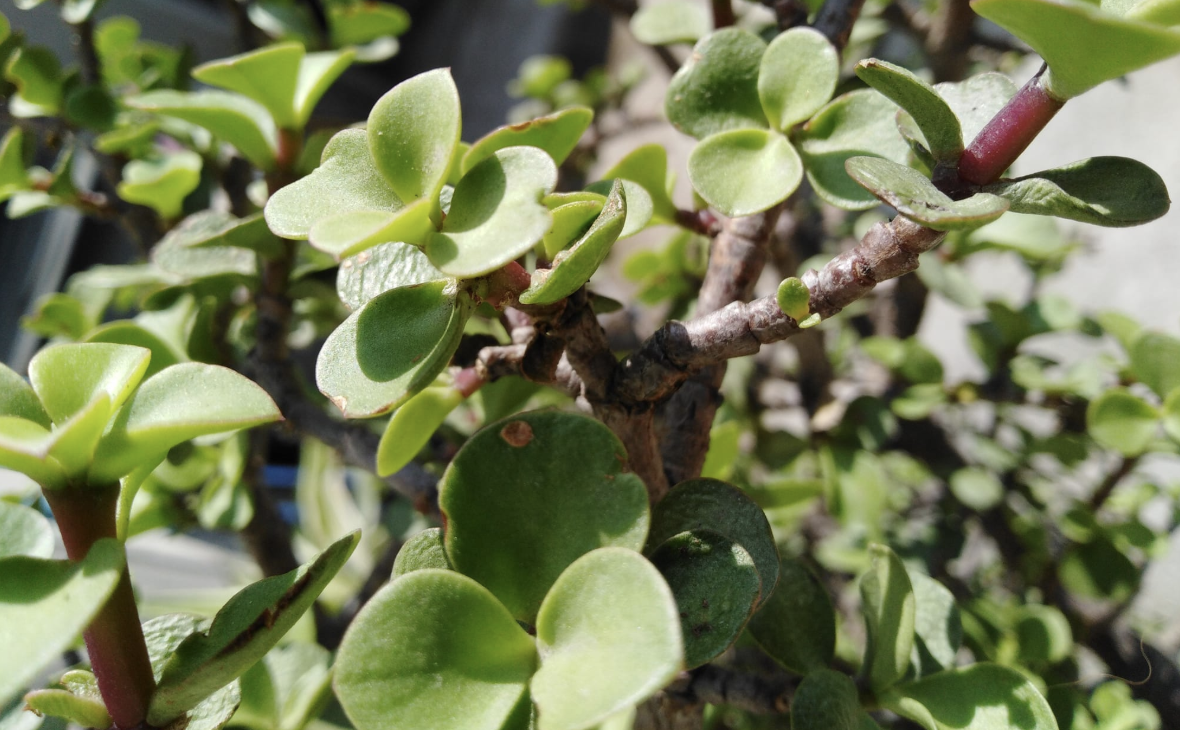
Viscum crassulae, the spekboom mistletoe, is a small, rounded succulent shrublet whose fleshy growth blends well with its host. The berries are orange to reddish instead of Christmas-card white.
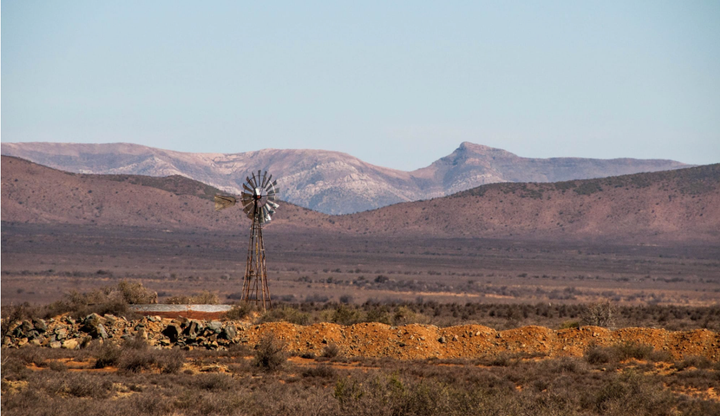
In his SANBI PlantZAfrica account, botanist Ernst van Jaarsveld describes this varietal as found mainly on spekboom, Portulacaria afra, and occasionally on some tree-like euphorbias. Its natural range is in Eastern Cape thicket country, including the Graaff-Reinet, Jansenville and Cookhouse districts, though it's not a feature of every Karoo garden or landscape.
What looks like another piece of succulent growth may be a separate plant, attached to the branch and drawing resources from it.
We tend to picture plants as distinct individuals, each with roots in its own patch of soil. Mistletoe's place in the world is secured through another living plant.
What does “parasite” actually mean?
Many mistletoes are described as hemiparasites. They photosynthesise, making sugars using sunlight, but draw water and nutrients through a specialised connection to a host called a haustorium.
This separates them from plants that perch on branches. An epiphyte uses a tree as a place to grow without tapping into its water-conducting tissues. Mistletoe establishes a physiological connection.
The host bears a cost that depends on the species involved and the number of mistletoes. The presence of mistletoe doesn't mean that the host will inevitably die. Research on mistletoe–host relationships treats those differences as central. And mistletoe has value for the wider community.
The birds do the planting
For a mistletoe seed, falling onto the ground is usually the wrong beginning, because it needs to reach a good host - not unlike the conditions needed for a successful Christmas lunch.
Birds solve this problem by providing several routes for depositing mistletoe seeds, including regurgitation, droppings and bill-wiping. In the case of spekboom mistletoe, fruit-eating birds deposit seeds as they wipe their beaks on branches. The seedling then grows towards the host’s surface and establishes its connection.
This is a neat exchange, albeit one for which the host has not volunteered. The bird gets food; the mistletoe gets transport and a chance to establish. The branch becomes the meeting point of an animal’s meal and the plant’s next generation. Far from being an isolated botanical oddity, a clump of mistletoe reflects a chain of opportunities.
A burden that also feeds others
Mistletoes provide resources for more than their seed-carrying birds. Some offer nectar, foliage for browsing animals or places for birds to nest and roost. Their relationships extend to insects and other organisms.
A revealing experiment took place in Australian woodland. Researchers David Watson and Matthew Herring removed mistletoe from 17 sites and compared the subsequent bird diversity with control sites.
Three years later, the removal sites had lost, on average, about a fifth of their total bird species richness. The researchers suggested that nutrient-rich fallen mistletoe leaves helped explain the wider effects, supporting food resources below the canopy.
There's no need to turn every mistletoe into either an enemy or a conservation hero. Understanding the relationship comes first.
The Christmas sprig has symbolised the mistletoe, usually indoors and detached from the branch it fed on. The southern African story includes a bird feeding and a second plant concealed among the leaves.
Comments ()