
Auralee’s international popularity gives South African mohair valuable visibility, associating a Karoo fibre with a fashion business admired for the seriousness with which it treats materials.
Japanese fashion designer Ryota Iwai has built an international reputation by beginning with the material. His Tokyo-based label, Auralee, is known for understated clothing made from carefully developed fabrics. Iwai often starts each collection by considering how a textile should feel and move.
His approach has taken him around the world in search of raw materials. He has travelled to Mongolia for cashmere and camel hair, Australia and New Zealand for wool and South Africa for kid mohair.
Auralee’s interest is a reminder for South Africa’s mohair industry that fibre produced on Karoo farms forms part of some of the most closely watched fashion collections in the world.
A fashion label based on fabric
Auralee was founded in Tokyo in 2014 and has grown from a small Japanese label into an important name on the international fashion calendar. The brand has occupied a prominent opening position at Paris Fashion Week Men’s for several seasons, while its clothing is now sold through more than 100 international stockists.
Iwai travels to different countries to find the fibres that become the basis of Auralee’s collections. The label has attracted attention for its relaxed tailoring and close attention to texture. This material-led approach grounds the design process from the beginning.
In an earlier interview with Rakuten Fashion Week Tokyo, Iwai explained that he usually develops an initial idea from the feel, weave, dye or processing of a textile. He works directly with weavers, testing the material repeatedly before deciding exactly what the finished garment should become.
For Iwai, sourcing is also based on personal relationships. He has said that his overseas visits are opportunities to meet suppliers, explain how Auralee hopes to use the material and develop trust with the people involved in producing it.
Why kid mohair?
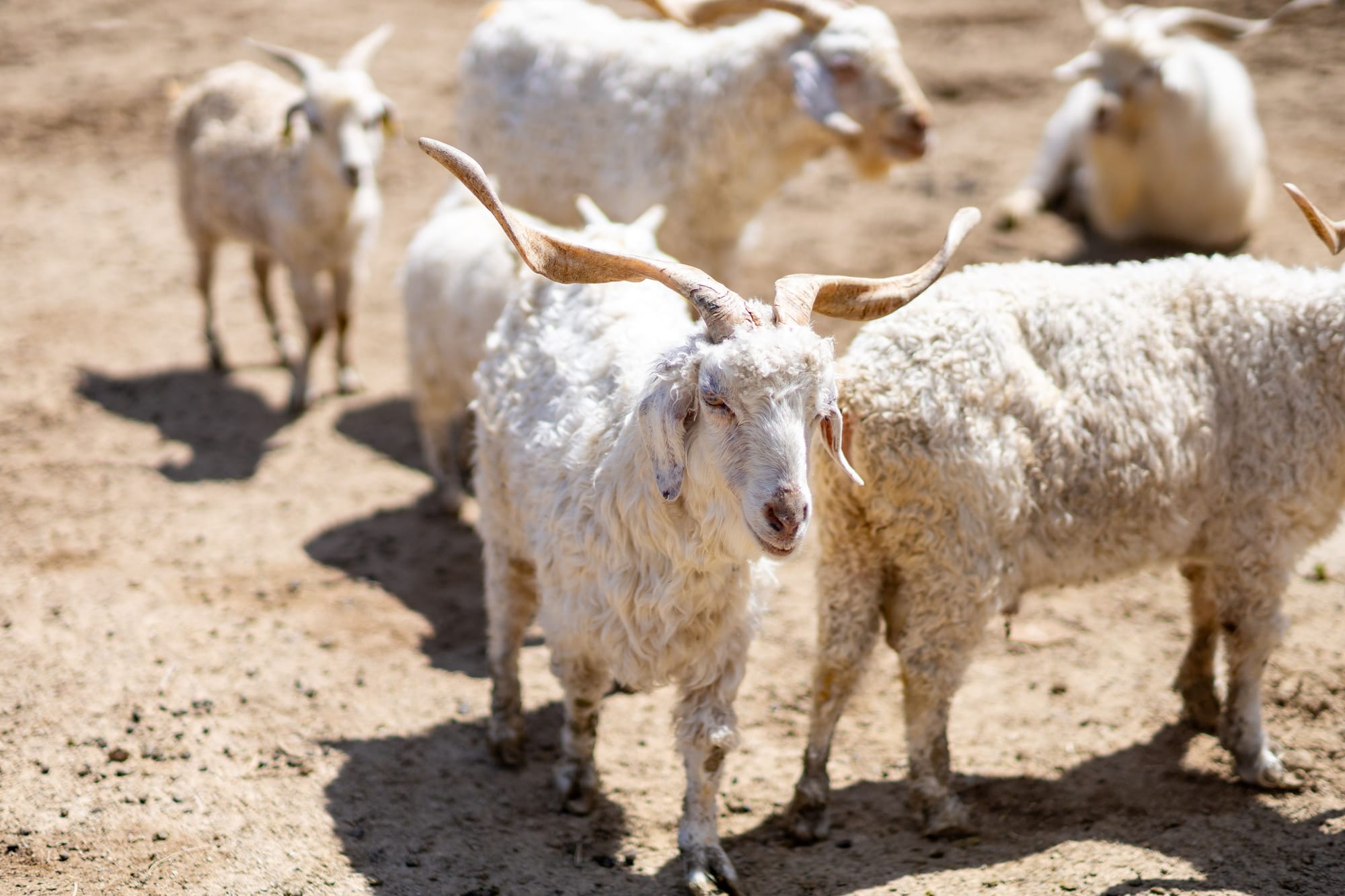
Mohair comes from the coat of the Angora goat. The word “kid” refers to fibre shorn from young goats. Kid mohair is the finest and softest category of mohair. As an Angora goat matures, its fleece generally becomes coarser. Kid mohair is valuable for clothing worn close to the skin, where softness and comfort matter.
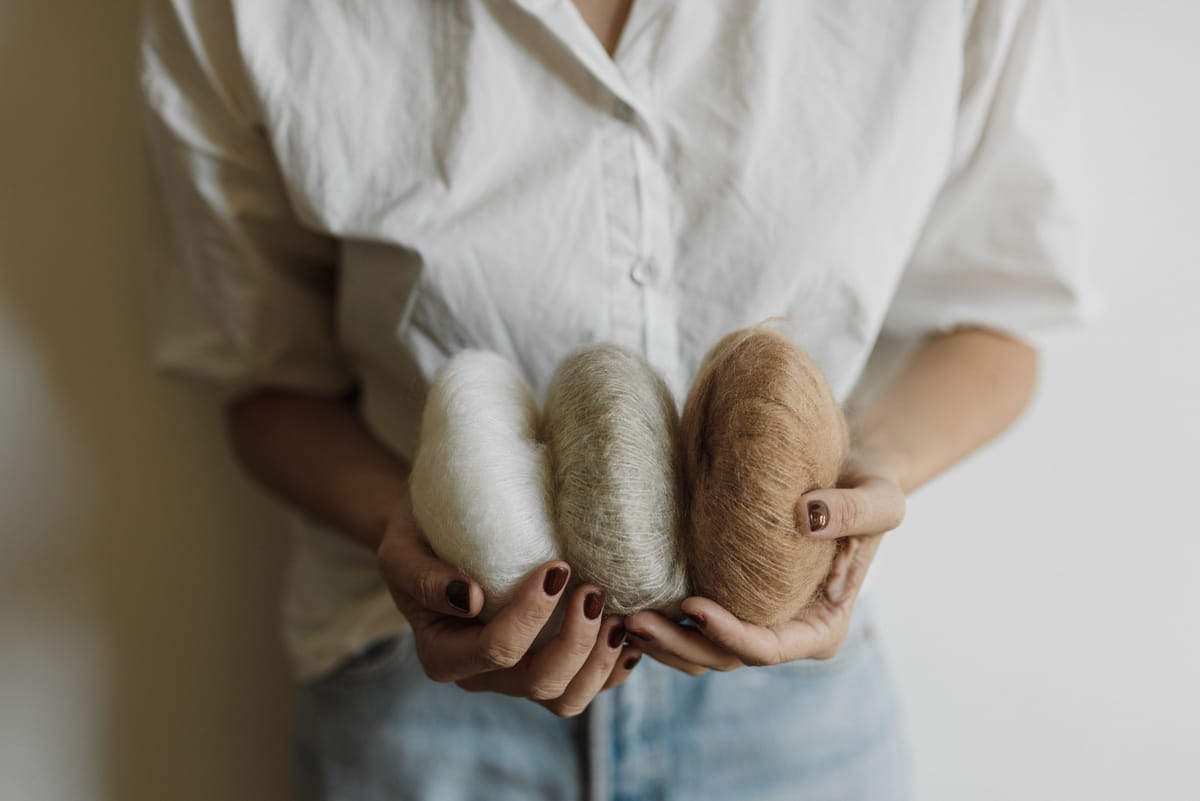
Auralee has used South African kid mohair in several ways. The brand’s garments have included softly brushed jerseys and caps, fine polo shirts, sheer knitwear and tailored fabrics that combine kid mohair with wool.
Auralee says its Autumn/Winter 2022 mohair came from high-quality South African raw material. The label's “Brushed Super Kid Mohair” was made by selecting especially fine hair from young Angora goats.
The same kid mohair was also used to produce an almost transparent high-gauge knit. Here, the appeal was the ability to spin an extremely fine yarn with a smooth surface and little of the prickliness sometimes associated with animal fibres.
This is where the quality of kid mohair comes in. The fibre can produce warmth without much weight, accept strong colour and create anything from a soft raised surface to a fine, translucent fabric.
Why South Africa?
South Africa produces more mohair than any other country. Recent industry figures indicate that it supplies approximately 56% of the global clip, amounting to more than 4.5 million kilograms a year.
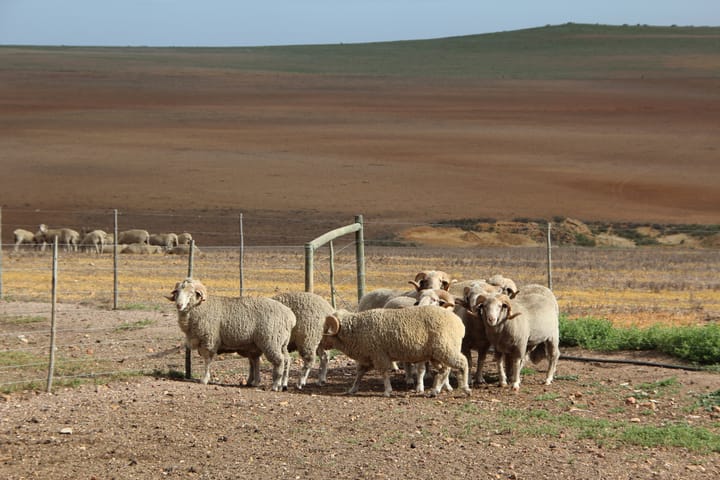
Much of that fibre comes from Angora goats raised in the Eastern Cape and the Karoo, around towns like Willowmore, Steytlerville, Jansenville and Graaff-Reinet.
These dry regions are well suited to Angora goat farming. The bales are then sent to brokers in Gqeberha, where mohair is offered to buyers at auction. This means a jersey labelled as Japanese design contains fibre grown in the Karoo, processed through South African brokers and then spun or manufactured in another country before reaching a Japanese workshop.
The route is not always direct. South Africa's largest export markets include China, Italy and Taiwan. These countries have major processing industries that supply yarn and fabric to fashion brands around the world.
A longer Japanese connection
Japanese textile companies have developed longstanding relationships with South African producers around the finest categories of mohair.
Miyuki Keori, a Japanese textile manufacturer known for high-quality suiting, has supported awards recognising South African mohair farmers. Daidoh, another Japanese company with interests in apparel and textiles, has also sponsored competitions rewarding farmers who produce exceptional summer kid mohair.
These awards reflect a feature of Japanese fashion and textile manufacturing: close attention to the qualities of the raw material. Japan has a reputation for taking familiar fibres and changing their character. A designer like Iwai is interested in what can be done with its specific fineness and response to colour.
More than an origin label
Auralee’s international popularity gives South African mohair valuable visibility, associating a Karoo fibre with a fashion business admired for the seriousness with which it treats materials.
South Africa can produce mohair with the strength and lustre demanded by luxury clothing. Japanese designers and textile makers have developed the technical knowledge to transform this fibre in precise and sometimes unexpected ways.
Auralee’s clothing may carry a Made in Japan label, but part of the story begins much further away, in the dry farming country of South Africa.
 Liz Thorne
 Mariana Balt
 Lynette Spencer
 Anchen Coetzee


Comments ()