
The secret lives of Karoo owls
The next time a distant hoot drifts across the dark, it is worth pausing for a moment. An owl is beginning another night's work somewhere beyond the reach of the stoep light.
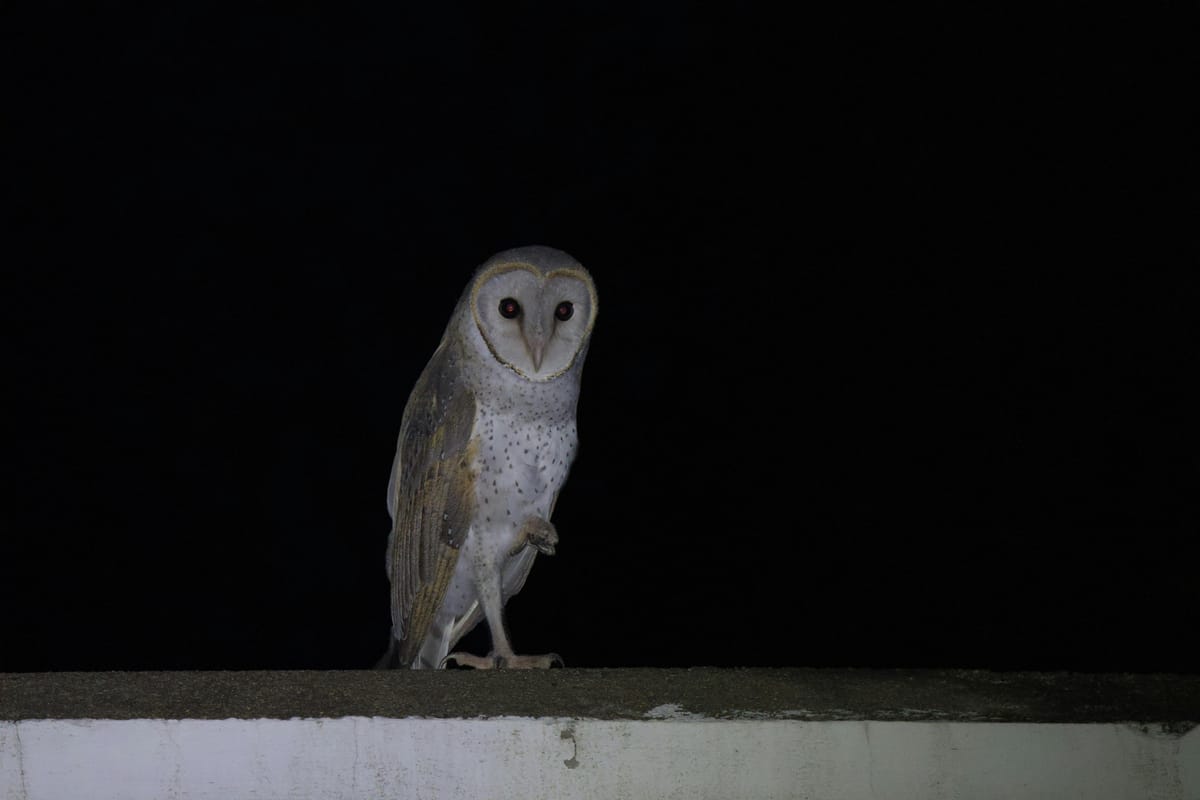
As the Karoo slips into darkness, the daytime vigil of sheep camps and windmills gives way to something older and more mysterious. As the world sleeps, silent hunters drift across the veld, their wingbeats imperceptible, searching the grass and riverbeds.
Owls have long occupied a special place in Karoo folklore. Some regard them as omens, others as guardians of the night. What can be certain is that these remarkable birds are among the region's most important predators.
The ghost of the farmyard
The barn owl is possibly the most recognisable owl in South Africa. With its heart-shaped white face and pale plumage, it often appears ghostly white when illuminated by moonlight or stoep light.
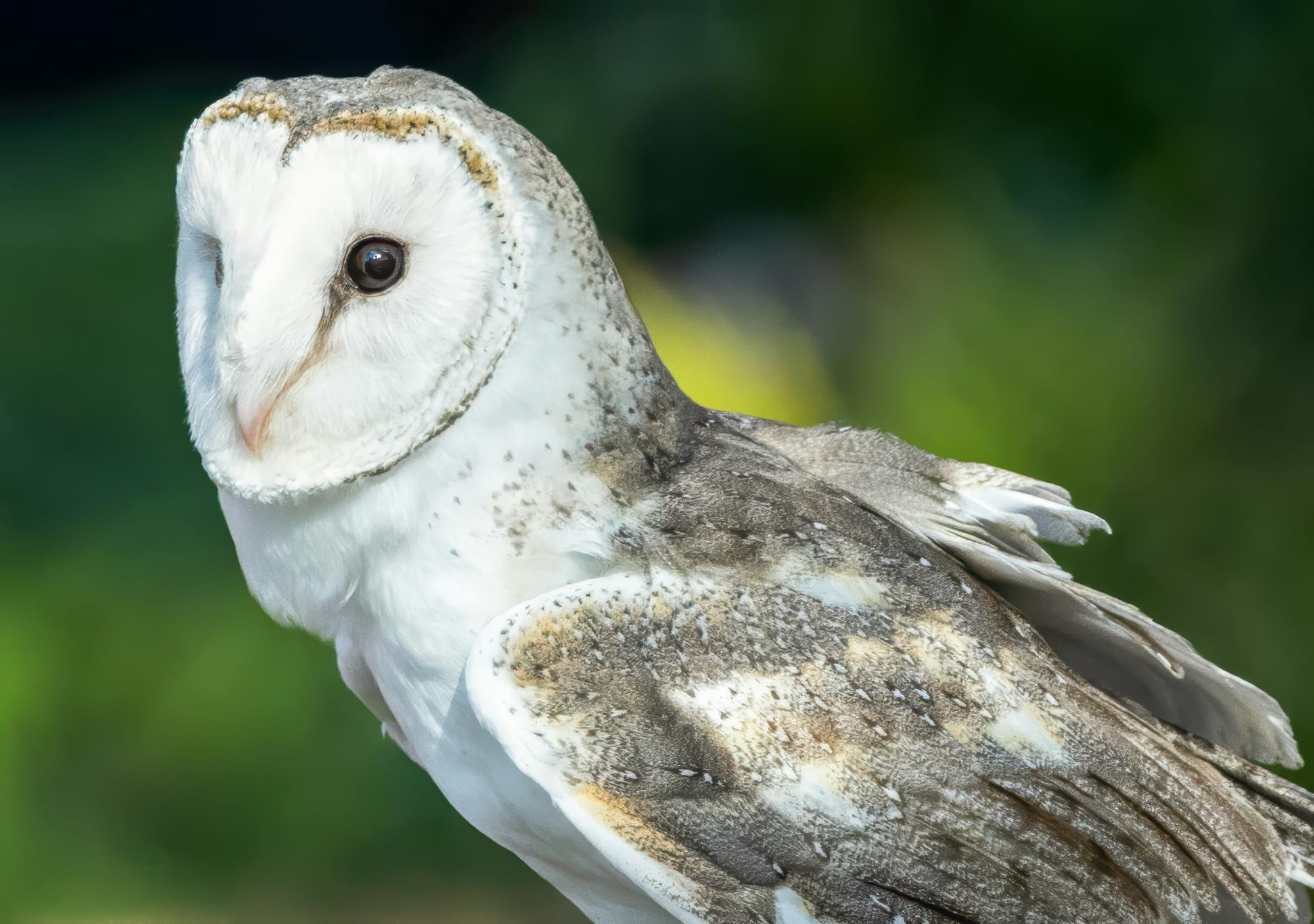
Barn owls have adapted exceptionally well to living alongside people. They frequently nest in old barns, church towers, abandoned buildings and even beneath the roofs of farm sheds.
They are invaluable allies to farmers. A single breeding pair can consume hundreds of rodents in a year. Mice and rats make up the bulk of their diet, so that they provide a natural form of pest control without the need for poisons.
Many Karoo farmers welcome them for exactly this reason. A barn owl hunting above a lucerne field may be doing more work than many people realise.
The voice of the Karoo night
The sound most associated with the Karoo after dark belongs to the spotted eagle-owl. This medium-sized owl is widespread throughout South Africa and is often encountered close to towns and farmhouses. Its distinctive call, a deep sonorous hoot, is one of the defining sounds of the African night.
They are patient hunters that scan the terrain before swooping down on rodents, reptiles, insects and small birds.
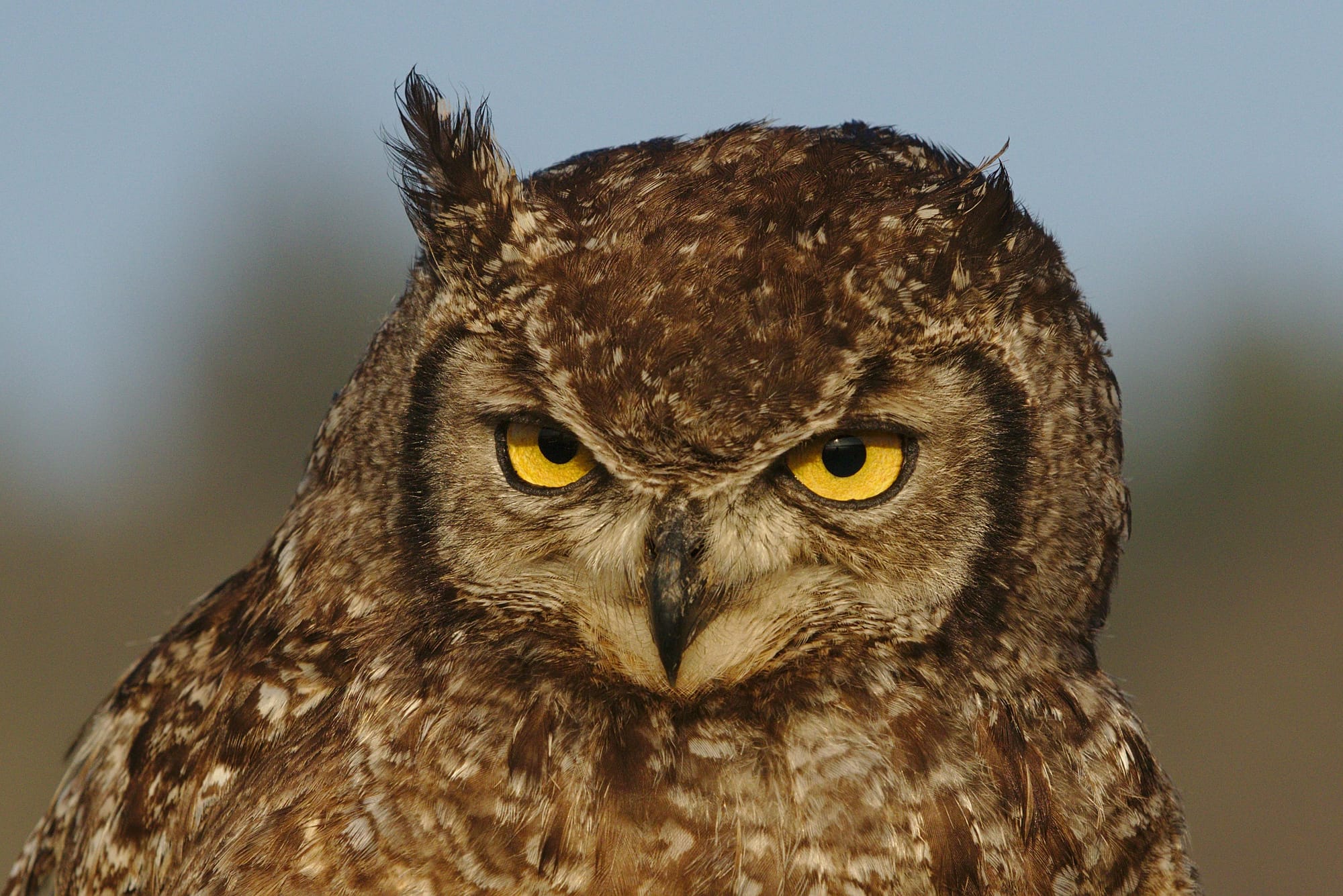
Spotted eagle-owls can hunt across open plains and river corridors with equal confidence. Their mottled plumage blends seamlessly into the environment, making them surprisingly difficult to spot during daylight hours. In fact, many people hear them regularly without ever seeing them.
The giant of the darkness
If the spotted eagle-owl is the voice of the Karoo night, the Verreaux's eagle-owl is its undisputed monarch. Sometimes called the giant eagle-owl, this impressive bird is one of Africa's largest owl species. Standing up to 65 centimetres tall with striking pink eyelids and powerful talons, it commands immediate attention.
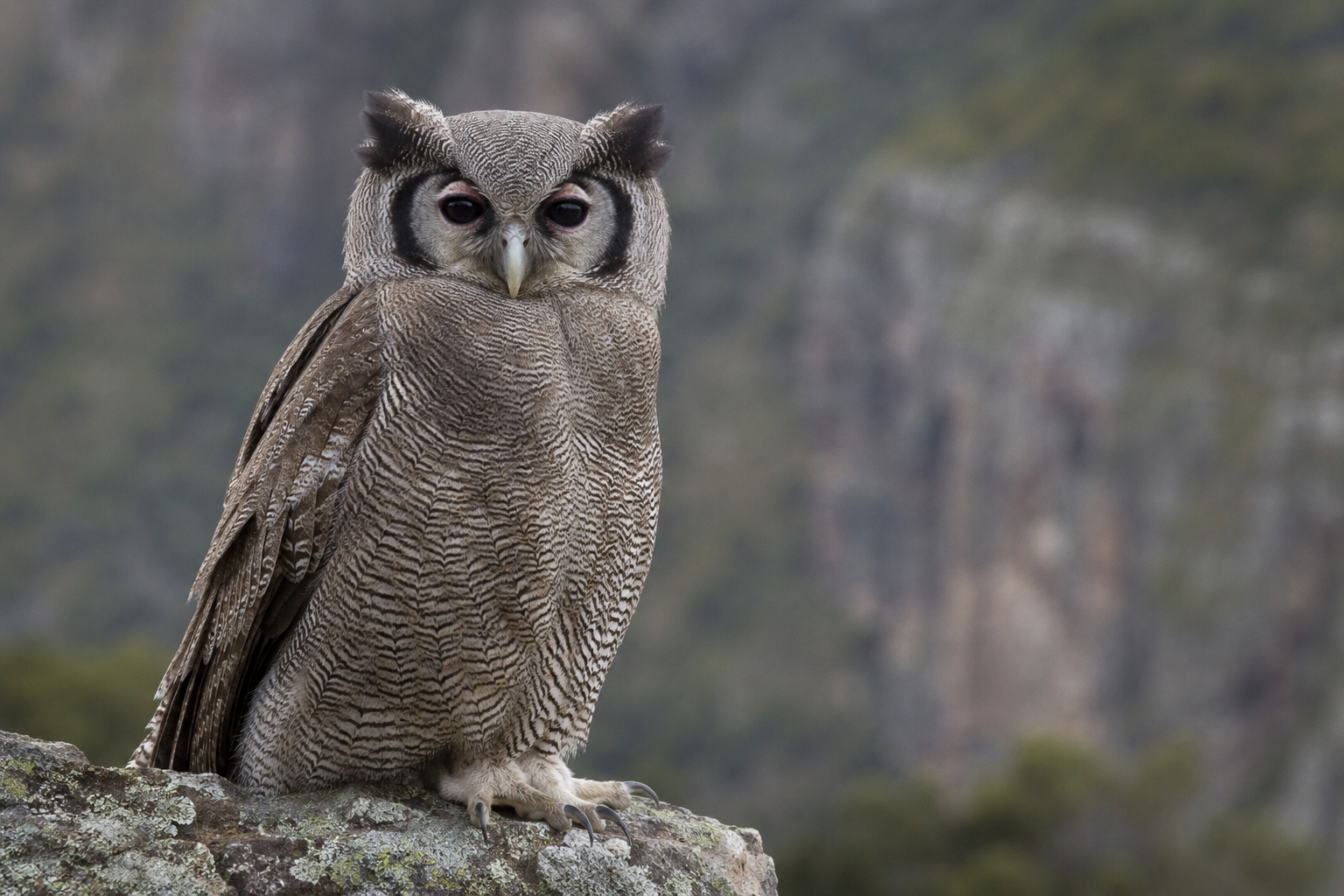
Verreaux's eagle-owls favour larger trees or riverine habitats and rocky areas where they can survey vast stretches of terrain. Their deep booming calls can carry great distances across still evenings. Though rarely spotted in the Karoo, they can sometimes be seen in riverbeds and drainage areas in this more arid region.
Their diet reflects their size. While rodents are important, they are also capable of taking larger prey, including hares, hedgehogs, francolins and occasionally other birds of prey.
A sighting of one is often remembered for years. Lucky Karoo residents can recall the rare moment they encountered a Verreaux's eagle-owl perched in a tree at dusk, watching silently as the darkness gathered.
Masters of silent flight
Owl feathers are specially adapted to reduce sound. Tiny fringes along the edges of their flight feathers break up turbulence, allowing them to fly with stealth. Their hearing is equally fine-tuned.
An owl can detect the faint rustle of a mouse moving through grass long before it becomes visible. Combined with exceptional low-light vision, this allows them to hunt with precision. These adaptations have been refined over millions of years to create predators perfectly suited to life after sunset.
Why owls are valuable
Healthy populations of Karoo wildlife depend on balanced predator-prey relationships. By controlling rodents and other small animals, owls help to prevent population explosions that can damage crops and spread disease.
Unfortunately, they face threats of their own. Road collisions, habitat loss, secondary poisoning from rodenticides and collisions with power infrastructure all take a toll. Simple actions can make a difference. Preserving mature trees while protecting nesting sites creates safer environments for these birds.
The next time a distant hoot drifts across the dark, it is worth pausing for a moment. An owl is beginning another night's work somewhere beyond the reach of the stoep light. Silent and perfectly adapted, the owl is one of the Karoo's most fascinating residents.

Comments ()