
The last empty place? Rethinking wilderness in the Tankwa Karoo
The Tankwa asks patience and a willingness to look beyond first impressions. Those who arrive expecting spectacle may leave underwhelmed. Those who stay long enough often discover something lasting.
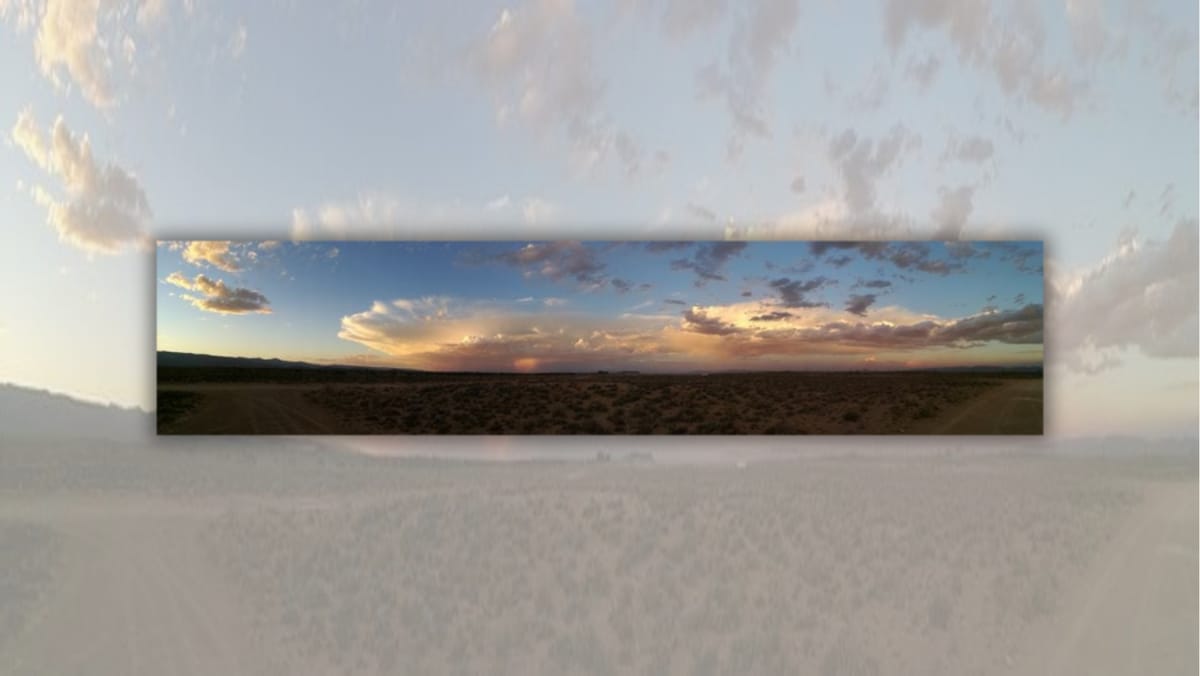
The Tankwa is uniquely silent. For many, this silence means emptiness, tells of a vast unoccupied space where very little happens. The Tankwa is usually described as one of South Africa’s last untouched regions, a place where wilderness still exists in its purest form.
That said, the idea of an “empty place” deserves closer attention, because natural places are rarely empty.
A region without definition
The Tankwa Karoo National Park is located within one of the most arid parts of the country, framed by the Roggeveld escarpment to the east and the Cederberg to the west.
Rainfall is rare and unpredictable, while temperatures swing between extremes. The region looks harsh and stripped-down. Spend time here, however, and your perception begins to sharpen. Hardy shrubs cling to life where insects hurry, and after rare rains, the veld can erupt into brief but extraordinary displays of wildflowers.
Human traces in a so-called wilderness
The Tankwa has been visited by people for centuries. Pastoral farming and seasonal movement have left their imprint on the land.
Old kraals and abandoned homesteads are markers of long-standing relationships between people and place, so that to call the Tankwa empty is to overlook this history. It simplifies a place that is, in truth, deeply inhabited by people past and present.
Rewilding the meaning of wilderness
Conservation efforts in recent years have reframed how spaces like the Tankwa are managed. The concept of wilderness in South Africa is moving away from the idea of pristine land toward something more nuanced.
Rewilding, for example, now involves restoring ecological processes while acknowledging that people have always been part of these systems. In the Tankwa, this means balancing conservation with cultural history, protecting biodiversity while respecting the legacy of those who lived and worked here.
This approach challenges older ideas of wilderness as something separate from human life. This necessitates a more integrated understanding where nature and people are in conversation.
The pull of isolation
There is no denying the allure of the Tankwa’s remoteness. Travellers come for its space and clarity. The absence of noise is a luxury, while the vast horizon offers perspective that is difficult to find elsewhere.
The Tankwa's night skies are extraordinarily detailed. During the day, the endless land encourages a different way of seeing. The Tankwa feels remote because it exists in contrast to how most people live, but it is not disconnected. Roads lead in and out, while stories continue to accumulate with each visitor who passes through.
A place that asks something of you
The Tankwa asks patience and a willingness to look beyond first impressions. Those who arrive expecting spectacle may leave underwhelmed. Those who stay long enough often discover something more lasting.
The land asks you to notice what you would normally overlook: the transitioning light across a plain or the movement of wind through sparse vegetation; the persistence of life in difficult conditions.
Rethinking what we mean by empty
Calling the Tankwa the last empty place may say more about us than about the land itself. This view reflects a tendency to equate visibility with value and assume that what is not immediately apparent is somehow lacking.
The Tankwa challenges this assumption by showing that richness can exist without spectacle and that true wilderness outstrips the barriers of human development.
Comments ()