
Can the Karoo region get in on the pistachio boom?
Not every part of the Karoo will suit pistachios, but the conversation itself is one of change, suggesting a region willing to test its limits while maintaining practices that have sustained it.
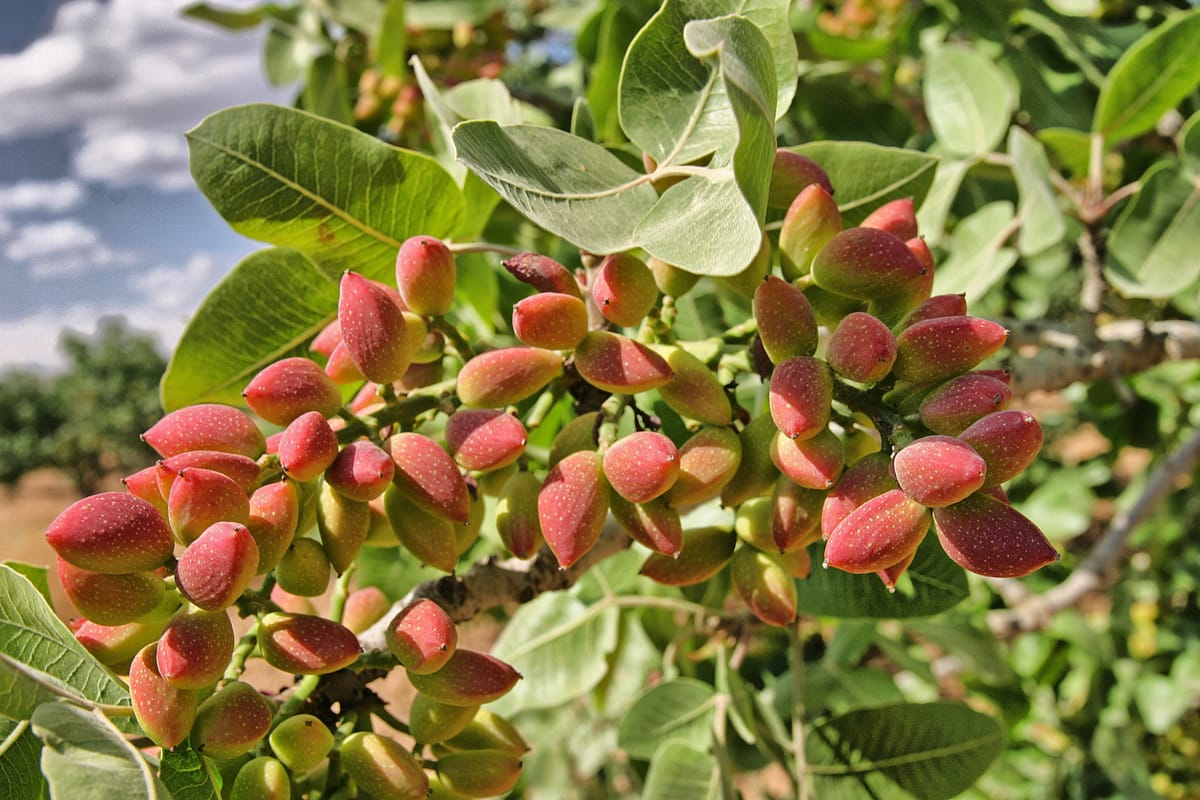
Pistachios, once considered a niche crop, are now being spoken about in the same breath as wine, citrus and macadamias. The question is whether regions like the Karoo can turn that potential into something meaningful.
The idea has weight behind it. Industry projections suggest a future export market worth billions, with thousands of jobs tied to new orchards, processing and logistics. While much of the early activity has centred around the Northern Cape, the broader semi-arid belt, including stretches of the Karoo, are firmly part of that conversation.
Why pistachios are attracting attention
Pistachios thrive in conditions that would challenge many other crops. They prefer hot summers with low humidity and cold winters, a combination that allows the trees to rest and reset. Large parts of the Karoo already offer these conditions, where heat builds through the day and winter nights are chilly.
The same region that limits certain forms of agriculture could, under the right conditions, support something new. In this sense, pistachio farming South Africa might involve aligning with what it already does well.
Demand for pistachios continues to grow, driven by health trends and expanding markets in Asia and Europe. South Africa, with its counter-seasonal production, could fill that gap while offering fresh supply when northern hemisphere producers are out of season.
Can the Karoo realistically support a new crop?
The Karoo is huge and supports areas with reliable irrigation near river systems as well as vast dry zones where rainfall remains unpredictable. This means the pistachio conversation cannot be applied evenly across the region.
Where water is accessible, particularly along rivers and established irrigation schemes, the case becomes stronger. Pistachios are drought tolerant once established, but they still require careful watering in their early years. This creates a natural entry point for farms that already manage irrigation infrastructure.
Further inland, the picture becomes more complex. Rain-fed cultivation would carry significant risk, while transport distances and input costs could erode margins. Even so, the adaptability of pistachio trees opens the door to experimentation, especially as farmers look to diversify income streams. In this way, the Karoo agriculture future may not rest on a gradual introduction of new crops alongside traditional livestock farming.
Economic promise and practical constraints
Compared to staple crops, pistachios offer higher returns per hectare, particularly once orchards reach maturity. This has the potential to change farm economics while creating employment in areas where opportunities are often limited.
But there is a long lead time. Pistachio trees take several years before producing commercially viable yields. Farmers must invest upfront, often without immediate return, while managing uncertainty around markets and a variable climate.
Processing is another piece of the puzzle. A successful industry depends on more than orchards but requires facilities for sorting, roasting and packaging, along with reliable routes to export markets. Without this backbone, growth risks becoming fragmented rather than transformative. Still, the scale of the opportunity is difficult to ignore. Estimates suggest that a mature pistachio industry South Africa could generate between R2 billion and R3 billion annually. Even a fraction of that would carry real impact for rural regions like the Karoo.
A change in how the Karoo sees itself
For generations, the Karoo has been defined by its limits, its dryness, its distance and its resistance to easy cultivation. Farmers already know their land, adjusting to seasons that do not always follow predictable patterns. Adding a new crop might built on that knowledge, asking different questions while drawing on the same instincts.
Not every part of the Karoo will suit pistachios, but the conversation itself is one of change, suggesting a region willing to test its limits while maintaining practices that have sustained it.

Comments ()