
How Richmond became the Karoo’s book town
Richmond's story demonstrates that authentic success does not require heavy infrastructure but can be built slowly, guided by passion as much as by planning.
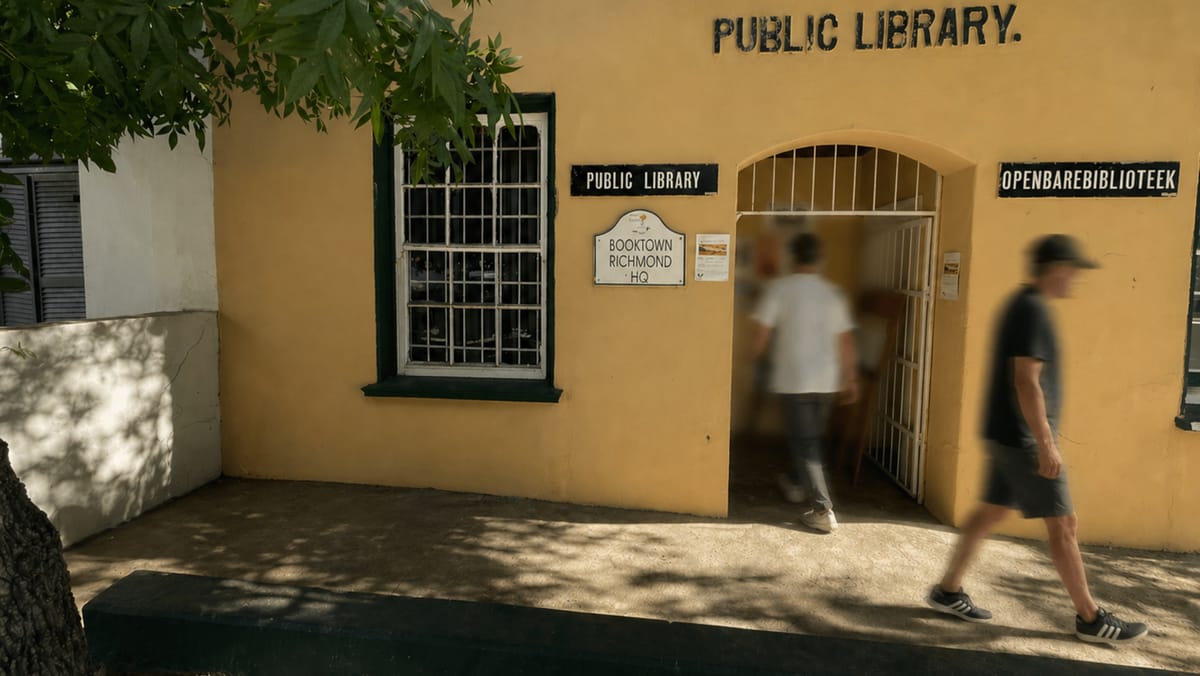
Richmond has carved out a story both improbable and inevitable. Today, the town stands as South Africa’s first official book town, drawing writers, collectors and curious travellers into its placid streets.
This identity was not achieved by accident, but was imagined and patiently nurtured over time, much like a novel. The transformation of Richmond shows how a small Karoo town can reroute its future while holding on to its past, turning books into both an economic engine and a cultural anchor.
Today, that vision finds one of its clearest expressions in BoekBedonnerd, the town’s flagship literary festival, which will celebrate its 20th anniversary from October 29 to 31.
The idea that changed everything
The origins of Richmond’s literary identity trace back to the early 2000s, when local visionaries began exploring ways to revitalise the town’s economy. Like many Karoo settlements, Richmond had faced the slow erosion of traditional industries, while younger generations drifted towards larger centres.
The turning point came with inspiration drawn from international examples such as Hay-on-Wye in Wales, a town that reinvented itself through books. The concept was simple but bold. Fill empty buildings with bookshops, then invite collectors and readers and allow the town itself to become an experience.
From this idea emerged the Richmond Book Town initiative. Old homes were repurposed into bookstores while private collections were opened to the public, and a culture of literary curiosity began to take root.
From quiet streets to a literary destination
Today, Richmond offers an experience unlike anywhere else in the country. Visitors arrive expecting a sleepy Karoo town and instead find shelves upon shelves of second-hand and rare books tucked into historic buildings.
Walking through Richmond is a process of slow immersion, a throw-back to the pre-digital yesteryear, where a visitor might spend an hour in a single room, paging through forgotten histories, before wandering into another space that reveals an entirely different collection. This form of slow engagement with books has helped establish Richmond as a recognised Karoo literary hub, offering an intellectual experience as wide as the town's great vistas.
The festival that gave it momentum
A defining force in Richmond’s rise has been the annual Richmond Book Festival. This event has become the high point of town’s literary calendar, and brings together authors, thinkers and readers for a weekend of conversation and exchange.
The festival showcases books while also turning the town into a meeting place for ideas. Writers engage with readers in intimate settings, while discussions range from fiction and poetry to politics, history and identity. This annual gathering has amplified Richmond’s profile, positioning it firmly within South Africa’s cultural landscape.
What Richmond offers to writers
Richmond provides something increasingly rare for writers: space. The quietness of the Karoo strips away distraction while the presence of books invites reflection. This interaction creates a place where ideas can percolate. Some writers visit for short retreats, while others return repeatedly, drawn by the town’s particular energy.
A literary community has formed around shared interests. Conversations happen easily, whether in a bookshop or over a simple meal. Richmond's unique Karoo qualities support both solitude and connection, two elements essential to the writing process.
A model for rural reinvention
Richmond’s success has broader implications. It demonstrates how rural towns can reimagine themselves without abandoning their identity. The book town South Africa concept works because it aligns with the town’s scale and character.
The process demonstrates that authentic success does not require heavy infrastructure but can be built slowly, guided by passion as much as by planning. This has naturally created tangible economic benefits. Tourism has increased and local businesses have gained new life, and the town has secured a place on the national map.
A story still being written
Like any good story, Richmond's journey continues. New bookshops appear while collections expand and the festival evolves each year. Richmond has proven that ideas, like the Karoo itself, stretch far beyond what the eye can see.



Comments ()