
A beginner’s guide to Karoo stargazing without expensive equipment
The best approach is to begin small. Learn the Southern Cross and follow the Milky Way. Notice how the sky changes from month to month. The Karoo will do the rest.
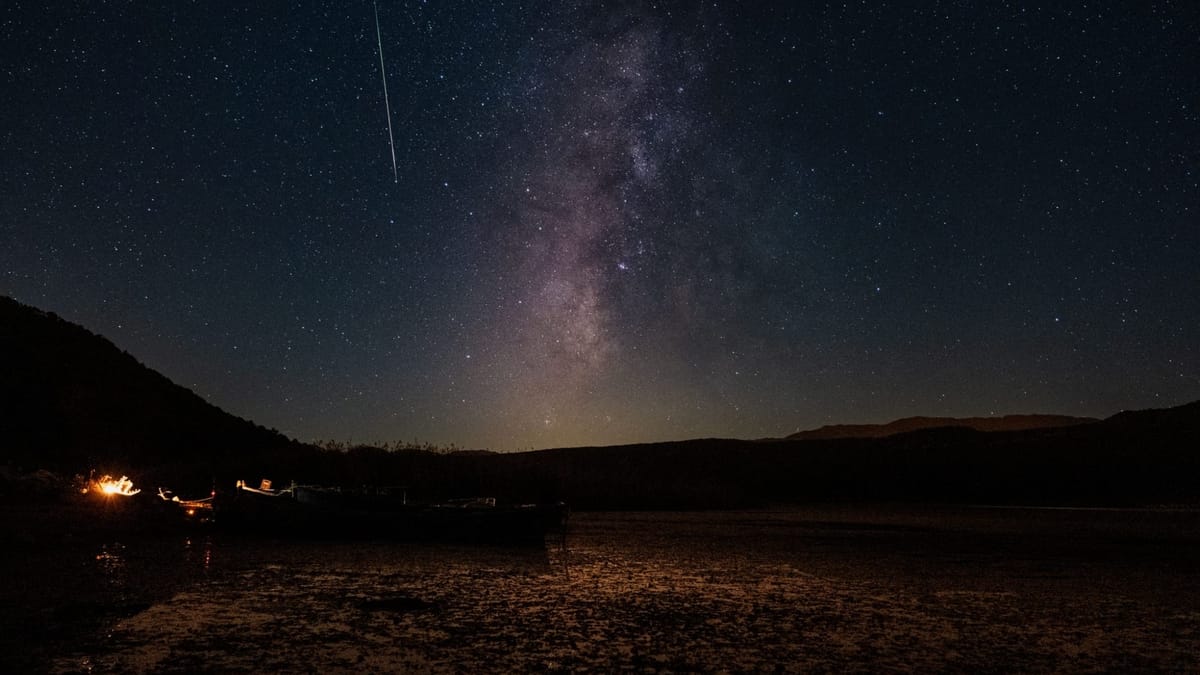
The Karoo still has something many cities have lost: darkness. Once the last shop has closed and the stoep lights have gone out, the sky expands. Constellations are joined by thousands of fainter stars, while the Milky Way makes a pale road through the night.
You don't need a telescope to appreciate this constellatory magic. In fact, successful Karoo stargazing often needs little more than a blanket and time to let your eyes adjust.
Start with the sky you already have
The naked eye can reveal far more than most beginners expect. Five planets - Mercury, Venus, Mars, Jupiter and Saturn - can be seen without a telescope when suitably positioned.
Venus and Jupiter are especially bright, and Mars can be recognised by its rusty orange colour. Saturn looks like a bright point rather than a miniature ringed planet, although even modest binoculars will change that. Stars usually twinkle more noticeably than planets, and bright planets become easier to pick out once you recognise this difference.
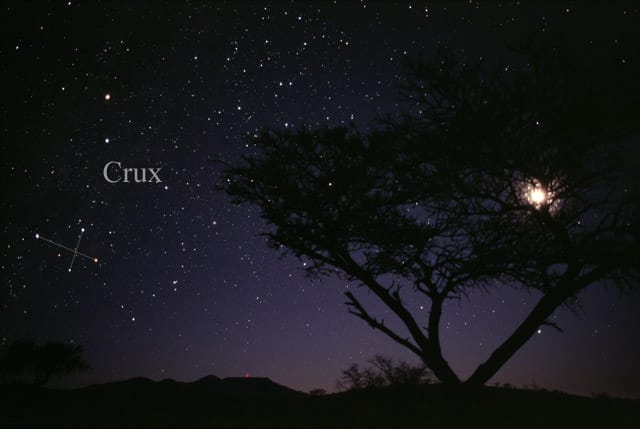
The Southern Cross is one of the most useful starting points in the Karoo sky. Nearby Alpha and Beta Centauri, commonly called the Pointers, help confirm that you have found the right cross rather than one of several similar star patterns. The longer axis of the Southern Cross can also help you estimate the direction of south.
Close to the Cross is the Coalsack Nebula, a dark patch where dust blocks the light of stars behind it - an absence in the Milky Way - and finding this Nebula is uniquely satisfying. You can also see the Large and Small Magellanic Clouds under properly dark conditions. These faint, misty shapes are neighbouring dwarf galaxies, and their visibility is a useful test of just how dark and clear your surroundings really are.
Learn to read the Milky Way
The Milky Way is often invisible from an urban garden. In a genuinely dark part of the Karoo, it becomes one of the night’s dominant features, with brighter knots and cloudy star fields visible across the sky.
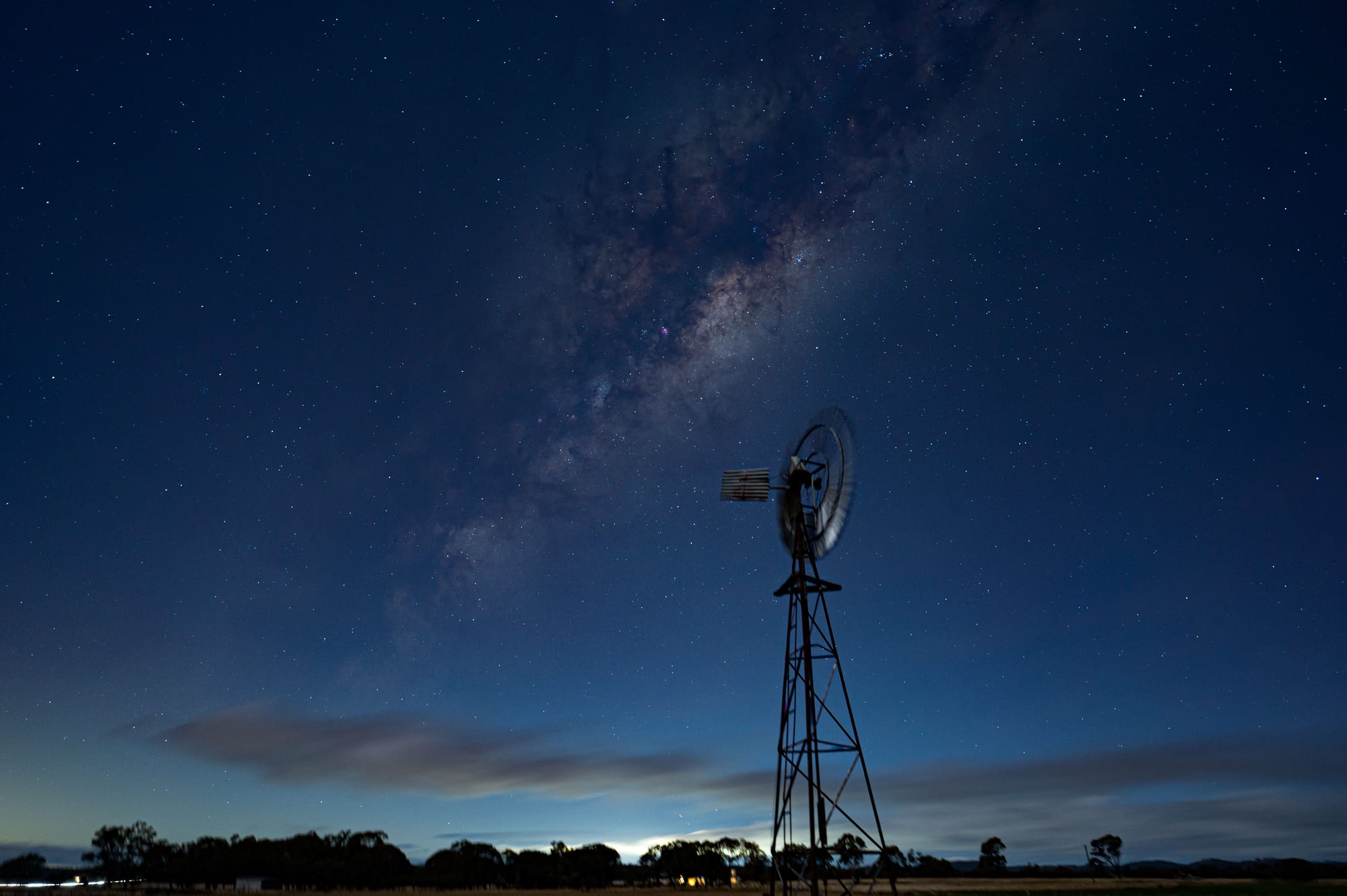
The Milky Way's most dramatic point is found near the centre of our galaxy, in the direction of the constellations Sagittarius and Scorpius. Viewing this part of the Milky Way is rewarding during the southern autumn and winter, when it becomes prominent in the evening sky. Scorpius is one of the easiest constellations to recognise, curling across the heavens with the red star Antares near its centre.
Orion, Sirius and Canopus become major features in summer, while the Magellanic Clouds can also be observed. There's no single correct season for naked-eye astronomy, as the sky changes throughout the year, which is part of the pleasure.
Choose the night as carefully as the place
Both clear weather and the phase of the Moon are important. A bright full Moon washes out faint stars and can turn a dark land surprisingly pale. For the deepest view of the Milky Way, plan your outing close to new Moon or choose a time before the Moon rises or after it sets.
A full Moon is an impressive object in its own right and can reveal large dark plains as well as bright cratered regions without magnification. The changing shadows around the Moon’s day-night boundary often make its surface most interesting during the crescent and gibbous phases.
Karoo winters bring long nights with crisp, dry air, although temperatures can drop after sunset. Summer evenings are warmer and easier for families, but thunderstorms and atmospheric haze can interfere. Checking both the weather forecast and lunar phase will prevent many disappointing trips.
Find genuine darkness
A farm road outside town seems dark until your eyes adjust and reveal a dome of light hanging over the horizon. A good dark-sky location should be removed from security lights and busy roads. Hills block distant town glow, while an open horizon gives you a wider view.
Light-pollution maps are useful for identifying promising areas, but they can't show every new development or bright security lamp. Rural accommodation providers can often tell you which part of the property has the clearest view.
Always get permission before entering private land. Choose a safe place away from livestock and uneven ground, then tell someone where're going. A wonderful view is not worth a twisted near an unknown farm gate.
Give your eyes time
Human eyes need roughly 20 to 30 minutes to adapt properly to darkness. Looking at a bright phone screen can undo much of that progress, so reduce the brightness or cover the torch with red cellophane (red light is less disruptive to night vision).
Bring a reclining chair or blanket since looking straight upwards soon becomes uncomfortable. Binoculars are useful if you already own a pair, but they're not essential. A free stargazing app can help identify objects, provided the screen is dimmed and used sparingly.
The best approach is to begin small. Learn the Southern Cross and follow the Milky Way. Notice how the sky changes from month to month. The Karoo will do the rest.
 Mariana Balt
 Anchen Coetzee
 Liz Thorne


Comments ()