
Why Cradock’s Fish River determined the town’s history
Understanding Cradock without understanding the Fish River would be to overlook the underlying force that made settlement possible.
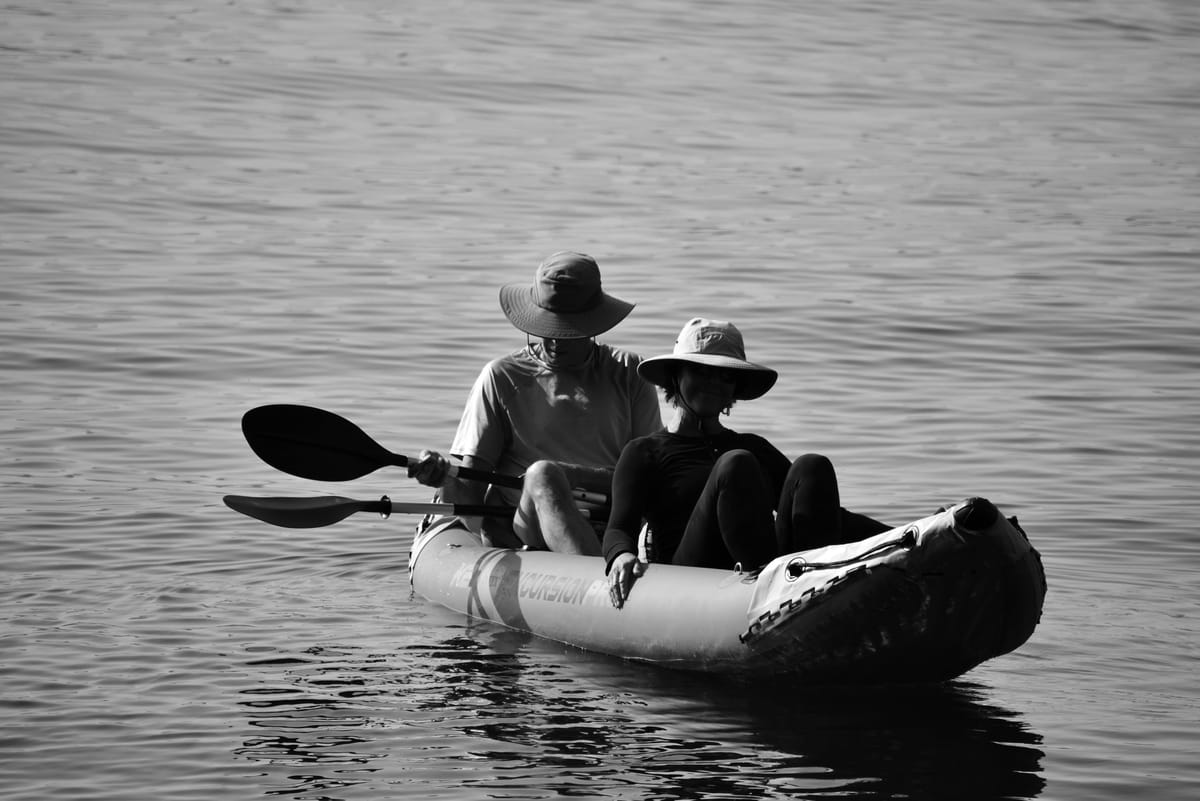

Long before streets were plotted the Fish River Cradock knew today was already carving its way through the Karoo. The river moved slowly, sometimes generously, tracing a line that would later determine where people could live. The water's presence was decisive in a region defined by dryness.
Early settlers followed water. While the surrounding terrain offered space and grazing, it was the river that made settlement viable by allowing for the beginnings of a structured community. Cradock grew alongside the river, but also because of the river.
Water as the authority
The Fish River held authority in the parched wilderness of the Karoo. The watercourse dictated planting cycles and livestock patterns and also influenced how land was divided and used. Farmers built their routines around its flow, learning when to trust the water and when to prepare for its absence.
The river created pockets of fertility that threw into sharp reflection the harsher surroundings. These strips of green became the backbone of early agricultural activity, anchoring livelihoods while drawing further settlement. Over time, irrigation practices emerged, simple at first and then more deliberate. Furrows were dug to extend channels and water was guided. While these interventions improved yields, they also deepened the relationship between the people and the river.
A route through the Karoo
Rivers were the early guides through the Karoo. Natural features often determined movement, and the Fish River offered a navigable line through otherwise difficult terrain. Traders and officials moved along its course, using it as both reference and resource.
This movement fed directly into Cradock’s development. Trade routes formed while goods passed through the town, linking it to broader regional networks. Livestock, wool and produce travelled outward, while supplies and people flowed in. The steady and unassuming river underpinned this exchange.
As such, the Karoo river history of the region cannot be separated from its economic evolution. The river did not act as a highway in the modern sense, but it carved routes that would later become roads, and those roads, in turn, reinforced the town’s role as a local hub.
Moments of abundance and restraint
The Fish River has never been entirely predictable. Periods of strong flow have alternated with times of near stillness, each leaving its mark on the town. Floods, when they came, brought both destruction and renewal. Fields were washed out while infrastructure was tested, yet the land often emerged more fertile in their wake.
Droughts, on the other hand, tightened the relationship between town and river. Water became something to be carefully managed. Storage systems improved, while communities adapted their expectations and habits.
A place of gathering and memory
The Fish River has long been a place of gathering. Families have picnicked along its banks while children learned to swim in its shallows and farmers paused along its banks at the end of long days. Stories accumulate in such places.
A particular bend in the river might be known for a flood from decades ago, or for a season when the water ran unusually high. These memories tie people to place in ways that go beyond economics or infrastructure.
The Fish River in the Eastern Cape also holds ecological importance, supporting birdlife, plant species and small ecosystems that soften the starkness of the Karoo. The river's introduces variation, and with that, a sense of life.
Making a town
Cradock’s relationship with the Fish River is not dramatic in the way coastal towns relate to the sea. There are no crashing waves or visible tides. Instead, the influence forms over decades and centuries, embedding itself into the fabric of daily life.
The town’s layout, its agricultural base, its trade connections and even its daily activity all carry traces of the river’s influence. While modern infrastructure has reduced direct dependence, the historical imprint remains clear.
Understanding Cradock without understanding the Fish River would be to overlook the underlying force that made settlement possible while guiding its growth in subtle but enduring ways.
The river continues to flow, sometimes full, sometimes at a trickle, always present. In that persistence lies its greatest contribution.




Comments ()