
The scientist who fell into conversation with the Karoo
When plant ecologist Sue Milton-Dean arrived in Prince Albert in 1987, the Karoo was a research subject. Nearly four decades later, the region has become a place she interprets both scientifically and emotionally - one whose intricate relationships are far easier to damage than to rebuild.
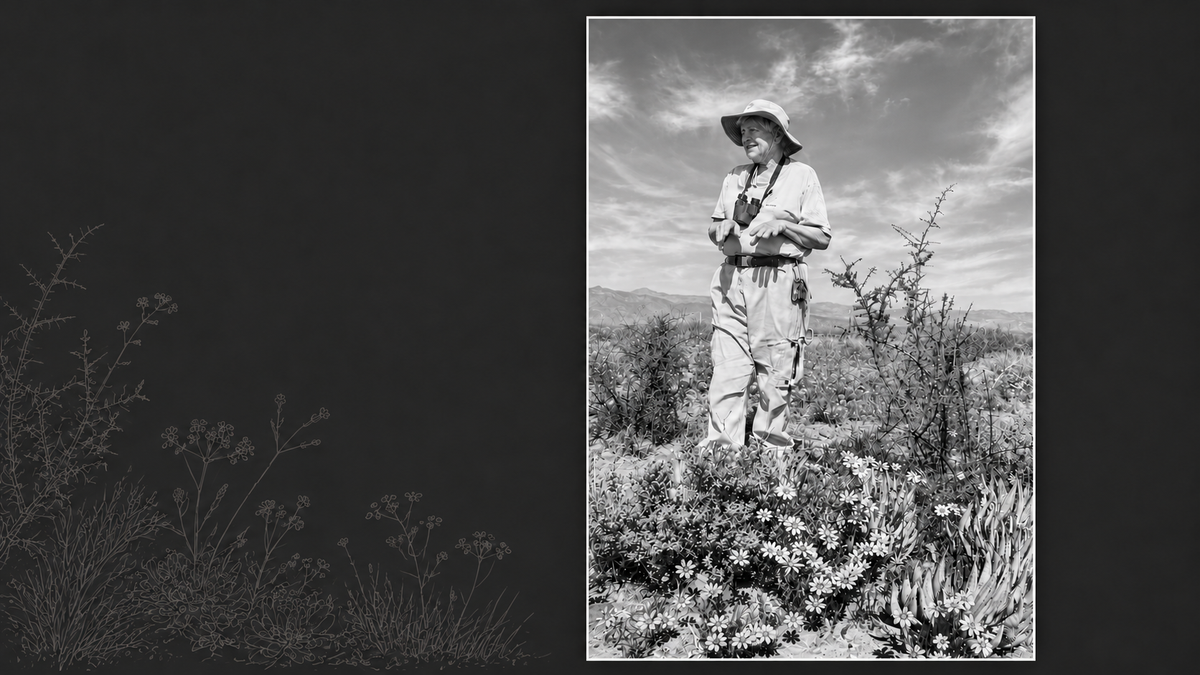
When Sue Milton-Dean walks into a piece of Karoo veld, she notices which species livestock prefer to eat and which they avoid. She looks for populations made up entirely of old plants, with no younger generation growing beneath them. She notices dwarfed growth and the small companion plants gathered in the shelter of a larger shrub. Each detail tells her something.
Karoo Times recently had the privilege of writing about this remarkable woman and the extraordinary depth of knowledge she has gathered over decades of studying the Karoo.
“A dwarfed plant architecture tells a story of overgrazing,” she explained. “Exposed roots speak of sheet wash and soil erosion. Companion plants sharing its shade speak volumes about the health of the surrounding veld.”
Milton-Dean has spent almost 40 years learning to interpret these signs. The better she has come to understand the Karoo, the more aware she has become aware of its mysteries.
Questions persist about how very sparse plant populations survive and why certain species are confined to one type of soil or position on the terrain. The veld has become more comprehensible, but never simple.
Arriving in the heat
Milton-Dean’s route to the Karoo took her through several very different South African regions. She researched invasive Australian acacias, worked on a rural farming project in KwaZulu-Natal and studied indigenous acacias at Nylsvley Nature Reserve. Later, while living in Knysna, she consulted to the indigenous fern-picking industry.
She learnt in all the places how animals, soils, light and rainfall influence the growth and reproduction of plants.
She and her husband, the ornithologist Richard Dean, arrived in Prince Albert on January 1, 1987. The temperature was in the 40s and the electricity had been disconnected at their rented house. Then Willie van Zyl, the town clerk who lived across the road, showed up with a watermelon and cut the seal on the power supply. “We were astonished,” she told us.
They had been sent to establish a research programme near Prince Albert as part of the Karoo Biome Project. Their work examined the forces driving changes in Karoo vegetation, including the effects of sheep, birds, rodents and ants on the production and movement of seed.
While living at the old Tierberg farmhouse near their research site, they bought a house in Prince Albert. The house had stood empty for 15 years and lacked an indoor toilet. What began as a research posting became a life.
A region built on relationships
Karoo veld can seem sparse and uneventful to the untrained eye. The region's plants are often small and the open ground between them draws most of the attention. Milton-Dean sees a region held together by countless relationships.
Plants compete beneath the soil while depending on one another aboveground. A young plant can use an older shrub for protection from sunburn and grazing. Different root systems and methods of storing water allow several species to share the same small patch without needing exactly the same resources at the same time.
Animals also entered the conversation. Creatures digging for insects or bulbs leave hollows that catch water and windblown seed. Ants and termites carry plant material underground, creating nutrient-rich patches that increase diversity. Burrowing bees, spiders, rodents, mongooses and aardvarks open channels through which water can enter the ground.
An abandoned aardvark burrow can become a hive for honeybees - the bees then pollinate the plants growing above the former burrow. Birds carry berries and fluffy seeds across the veld. Herbivores move seed in their dung while termites break down wood and return nutrients to the soil. Seemingly empty space is filled with exchange.
“I am in the veld every day,” said Milton-Dean. “I always engage emotionally with the plants and animals. I cannot separate emotion from academic work.”
When abundance actually means damage
Learning to interpret the Karoo sometimes means distrusting the most obvious interpretation. A dazzling carpet of spring flowers might look like proof of ecological health, but a uniform display of short-lived annual plants can indicate that the longer-lived shrubs have disappeared. When the heat returns, the flowers die and bare ground is re-exposed.
Even thorny or poisonous plants have a more complicated role than their reputation suggests. Farmers understandably don’t want them dominating grazing land, but these unpalatable plants can bind exposed soil and provide shade. After ploughing or heavy grazing, these might be the species “holding the fort”.
These plants can dominate for decades or even centuries. Only when age or drought removes them, combined with better land management, cab a more varied plant community return.
Farmers who understand this complexity walk through the veld and observe its plants. Milton-Dean learnt from experienced Karoo farmers about the great age and endurance of bossies as well as the moisture held in plants as an indicator of drought severity. She learnt that locusts and their dung can become a gift to the soil and that springbok concentrate their feeding on nutrient-rich patches.
Her conclusion is simple: farmers who know their veld tend to farm more sustainably. For Milton-Dean, responsible farming means keeping livestock numbers within the capacity of the land while setting aside veld or money for the droughts ahead. Stewardship in the Karoo is partly the art of saving something during the good years.
Trying to repair the conversation
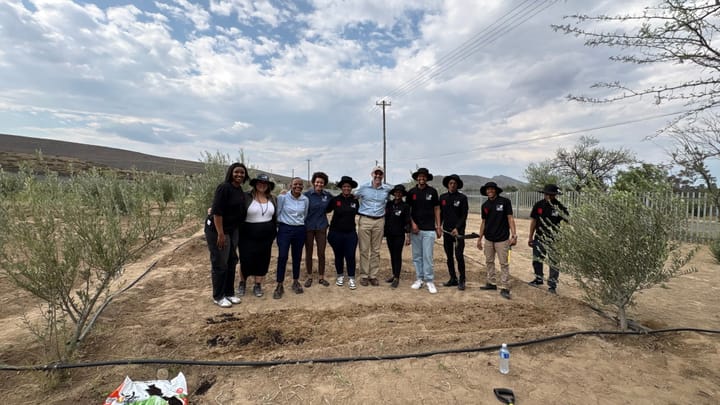
After leaving university life, Milton-Dean moved from studying ecological systems to attempting to reconstruct them. She and Dean established Renu-Karoo because locally appropriate indigenous seed was difficult to find for the rehabilitation of land damaged by mining, construction or overgrazing. The business began by collecting seed and growing plants for restoration projects, later expanding to include Karoo shrubs, trees, succulents and medicinal plants.

The work soon revealed the enormous difference between making land look green and restoring a functioning ecosystem.
A layer of ryegrass or teff temporarily covers bare ground after rain. Once dry weather returns, however, the annual plants die. There may be no hardy shrub to catch seed or shelter new growth. The land might have been revegetated, but it hasn't been restored.
A functioning ecosystem requires plants with different root depths, structures, lifespans and growing seasons. Some provide forage while others hold the soil and store moisture. The correct plants also vary between soil types and rainfall zones. Even two populations of the same grass species can be adapted to different growing seasons.
Restoration is therefore a matter of attempting to rebuild the relationships that allow the veld to endure.
No quick fix
The odds facing a Karoo seedling can be formidable. On a hot summer day, the surface of the soil can reach 65°C. A seed can blow away or be eaten. If the seed germinates in the open, the young plant might be killed by heat or grazed by mice and antelope.
The seed's best chance can lie in a debris-filled hollow or under a thorny shrub. Renu-Karoo has tested soil hollows, brush packing and different methods of sowing indigenous seed. A hollow that catches valuable moisture in sandy soil may hold water for too long in clay, drowning a new seedling. Brush can offer protection, but too much shade reduces the light needed for growth.
Much still depends on rain arriving at the right time. Rain itself is not an uncomplicated blessing. Some grasses respond to warm-season rain, while many vygies and bossies grow best after autumn rain. Hail can damage succulents while prolonged dampness can cause arid-adapted plants to rot.
“We are still learning,” Milton-Dean told Karoo Times. “We have not found a quick fix.”
The greater difficulty comes from what might already have disappeared. Many Karoo shrubs live for decades, but their seeds are viable for a relatively short time. Once the mature plants and local seed supply have been lost across a large area, simply resting the veld might not bring them back. If wind or water has also stripped away the permeable topsoil, new seeds are left on hard, smooth ground where few can germinate.
Some erosion can be controlled and larger dongas can be stabilised. The loss of long-lived forage plants across many hectares is much harder to reverse. Recovery can take decades or centuries, if it happens at all.
Keeping the knowledge alive
Milton-Dean’s concern now extends beyond the survival of plants. She is also thinking about the survival of knowledge. Scientific research is usually published in specialist journals and discussed at conferences. With agricultural extension services in decline, much of it never reaches farmers, schools, new landowners or conservation managers.

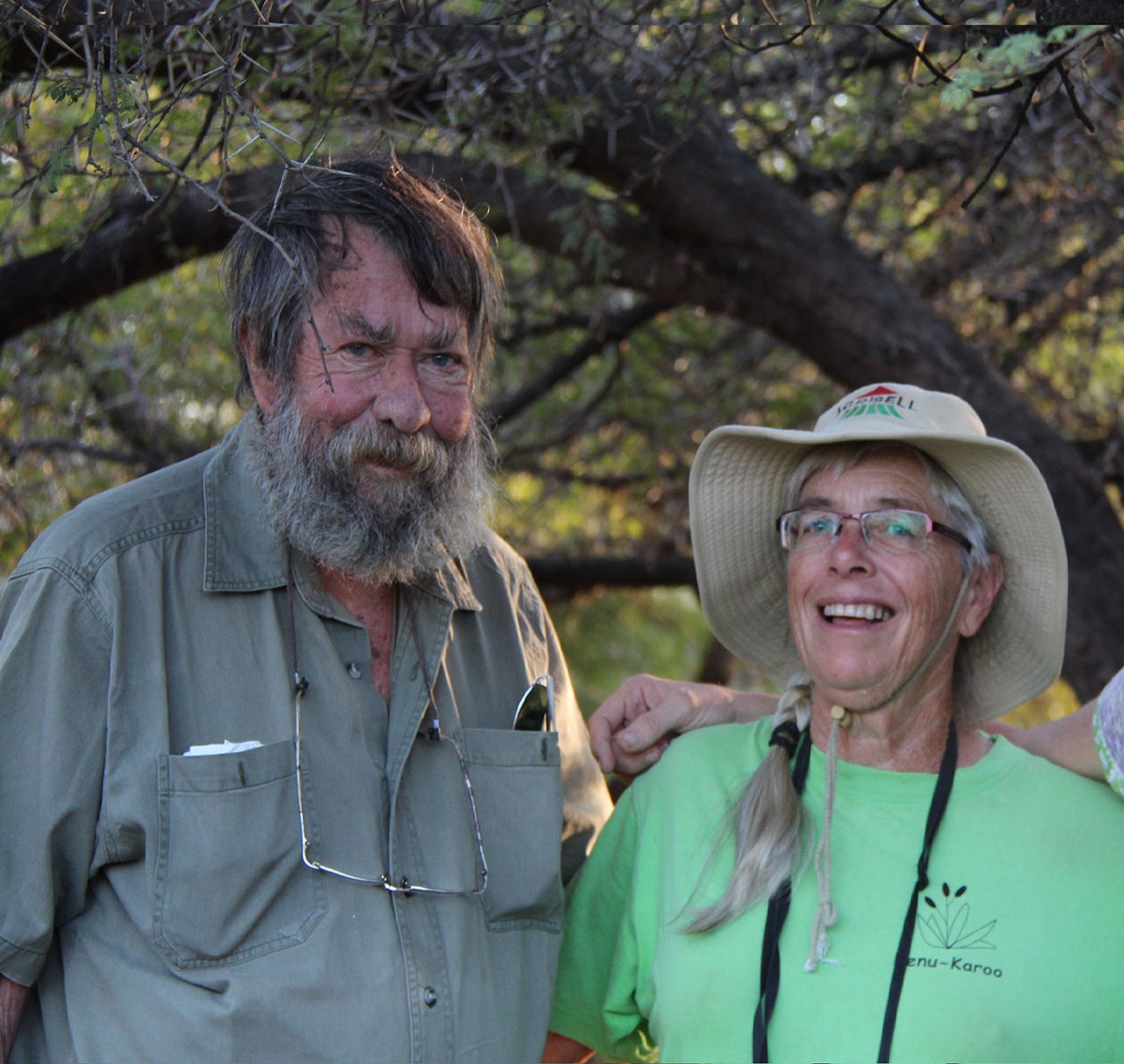
Wolwekraal Nature Reserve, established by Milton-Dean and Dean outside Prince Albert, was formally protected in perpetuity so that it could remain both an intact ecosystem and a place of learning. A new research and education centre is intended to make ecological knowledge more accessible through its library, archive, lectures and work with farmers, schools, artists and cultural heritage specialists.
The Reserve will also carry forward the shared work of a plant ecologist and an ornithologist who spent decades examining the same veld from different directions.
When asked what she hopes will continue growing after she is no longer directing the work, Milton-Dean's answer was “students, educators, volunteers and land users emotionally and intellectually engaged in conservation”.
After nearly 40 years, she is still pleased to encounter Hermannia grandiflora, the oumakappie, in the veld. This is a small, instructive pleasure. The life of the Karoo is found close to the ground, told in seeds, exposed roots, animal burrows and plants sheltering one another from the sun.
Sue Milton-Dean has spent a lifetime learning, and telling, this intricate story. Her work now focuses on sharing this story before it is lost.
 Mariana Balt
 Liz Thorne
 Lynette Spencer
Comments ()