
The Karoo art of saying nothing directly
Information in the Karoo must be decoded, but once you learn the dialect of implication, the conversations become surprisingly rich.
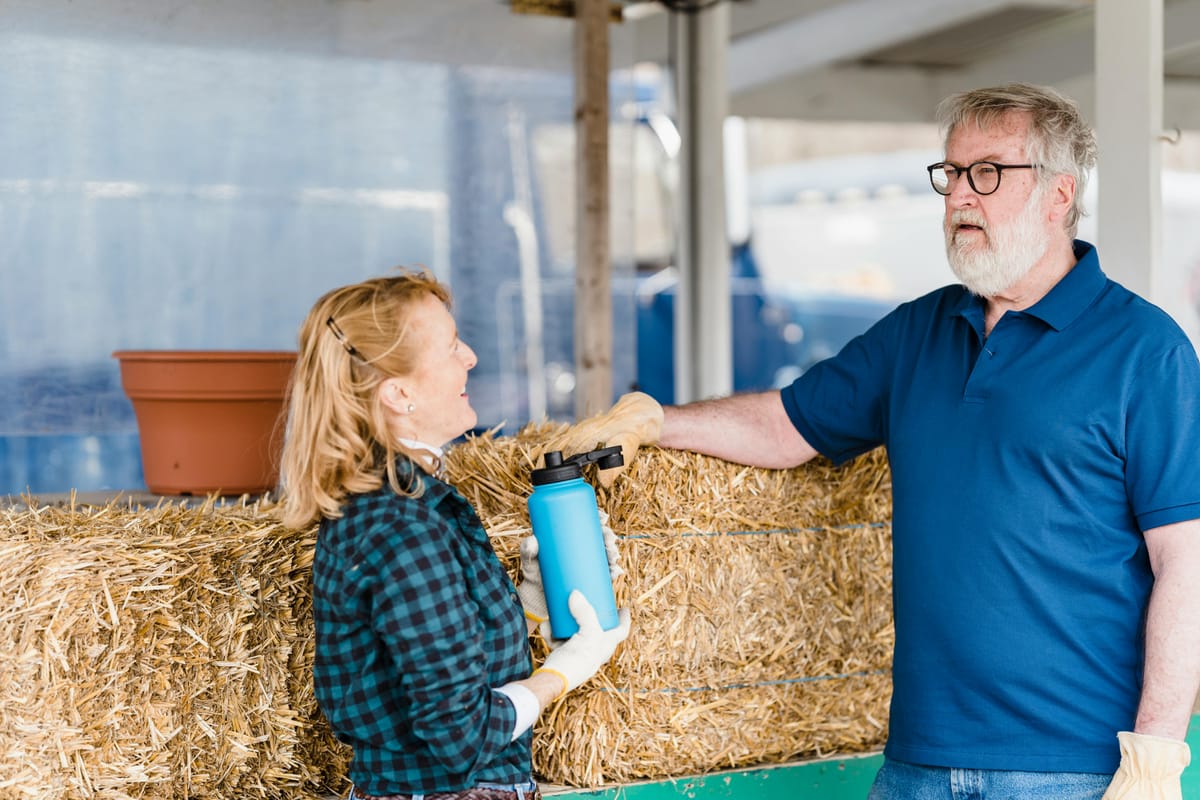
The question hangs in the air for a moment too long.
“So,” someone says eventually, looking past you, “how are things going on your side?”
This is an invitation to choose your words carefully.
You may be quoted shortly after.
In the Karoo you do not say exactly what you mean to say - that's rude, of course. You filter your philosophy by way of the weather and the state of the roads. The meaning is inferred.
A newcomer might miss the entire exchange. Take a typical morning outside a small-town co-op. Two men stand beside a bakkie waiting for the fuel truck to finish injecting life-giving transportation into the veins of the community. One of them studies the horizon while the other lights a cigarette.
“Johnnie says he got 60 mml yesterday,” the first says.
“Ja,” the second replies. “Johnnie is always lucky."
They both nod.
The untrained ear hears a comment about weather. The local population hears the undertone of a farm dispute, a deep family rift handed down through the generations. A rumour about Johnny's luck, in general, being down to more than his proximity to high rainfall.
The Karoo specialises in implication, because directness is considered poor manners. A blunt statement is a slammed door that you will not reopen easily. Instead, people circle their point slowly while offering enough space for the other person to understand without embarrassment.
Someone might say, “That one has interesting ideas.”
Translation: he's crazy.
Another might observe, “She keeps to herself these days.”
Translation: there has been trouble.
A third might remark, after a very long pause, “Well… everyone must live their life.”
Translation: the town has already formed its opinion.
Words are thrown into the nearest bush from which a hare might leap. Once the rock has landed there is a pause as the animal emerges. The pause is part of the language.
City visitors often panic during these pauses. They rush to fill the gap with chatter or unnecessary detail, but Karoo prefers understatement.
A drought might be described as “a bit dry”.
A financial disaster becomes “a tough year”.
A neighbour’s spectacular public meltdown will later be summarised with the phrase “things got a little lively”.
Everyone understands perfectly.
This habit springs from practical roots. People see each other every day in small towns. The butcher’s son plays rugby with the mechanic’s nephew, and the woman who runs the café grew up with your cousin. The social fabric is long-stitched and easily torn, as all old and delicate things are.
By softening statements, the community preserves the fragile machinery of coexistence. Nobody is forced into open confrontation while reputations survive with just enough dignity intact. It also creates a peculiar kind of storytelling, and the Karoo has mastered the art of the incomplete sentence.
Someone begins a story at a braai.
“Well, you know how Pieter can be when he’s had…”
The sentence fades. The listeners nod gravely.
Everyone knows how Pieter can be.
Another person might add, “And then the police arrived.”
Silence again.
A third voice mutters, “Ja.”
The story ends there. No details required.
This conversational style can frustrate outsiders who arrive expecting clarity. Journalists, in particular, sometimes struggle. Ask a direct question about a local scandal and the response may wander through an anecdote about a broken windmill before gently arriving nowhere.
Information in the Karoo must be decoded, but once you learn the dialect of implication, the conversations become surprisingly rich. Beneath the politeness lies a sharp intelligence, along with an instinct for social observation that would make any novelist jealous.
The towns might seem quiet, but the conversations are loud with meaning.


Comments ()