
The invisible worlds of Karoo koppies
Some of the vast Karoo's richest stories are found in its smallest spaces. A koppie looks bare from a distance, but up close it's a vibrant neighbourhood, crowded with lives that depend on the shelter of stone.
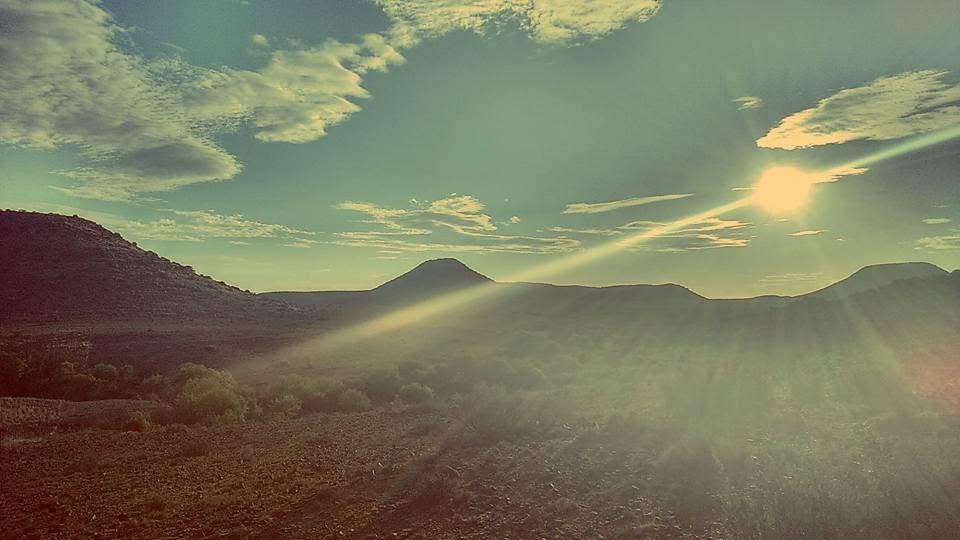
The ubiquitous Karoo koppie seems a less populated feature than a bushy veld or river course. But on closer inspection the koppie reveals a more intimate world: cracks that are shelters and ledges that hold pockets of soil.
In fact, the koppie is better viewed as a miniature ecological refuge that gives plants and animals access to conditions not easily found on the starker surrounding plains.
A world within a world
A single hill can offer sun-baked northern slopes, cooler southern faces, exposed summits and stable temperatures in its deep crevices. Rainwater collects in hollows while organic matter builds behind stones to create small but valuable pockets of fertile soil.
These microhabitats take up very little space while providing the perfect combination of shelter and temperature for a certain species. Dozens of these tiny living spaces can be found metres apart on a single koppie.
Koppie rocks also prevent rainwater from quickly disappearing into the open veld, and crevices slow evaporation. Shaded ground can still be damp long after the surrounding soil has dried.
Small strongholds for Karoo plants
Koppies protect plants from some of the pressures on flatter land, shielding them from sheep and antelope that sometimes struggle to reach steep ledges. This relief allows palatable shrubs and flowering plants to survive in places where they might otherwise be heavily browsed.
Succulent roots can anchor themselves in narrow cracks while their fleshy leaves store water through dry periods. Aloes and crassulas find refuge among boulders, along with lichens that slowly spread across exposed stone.
A cooler sloping face can support denser vegetation while a hot, exposed section favours plants able to tolerate intense sunlight and rapid water loss. The koppie is a compact botanical patchwork of shade and stone and the path taken by rain.
These refuges are even more important as temperatures rise and rainfall is less predictable. Plants can't uproot themselves in search of better conditions, so that a shaded fissure or cooler slope can offer the narrow margin between survival and disappearance.
Warm rocks and safe cracks
Reptiles make some of the most skilful use of koppies. Lizards bask on sunlit surfaces to raise their body temperature, then retreat into cracks when the heat becomes too intense or a predator approaches. Rocky crevices also provide shelter at night and during cold winter weather.
Different parts of the same hill warm at different rates, which allows reptiles to move between hotter and cooler positions through the day, regulating their temperature without travelling far. This changing mosaic can be an entire world for a small lizard.
Rock-living species are often highly specialised. Girdled lizards wedge themselves into crevices when threatened while geckos use narrow gaps that larger predators can't enter. The Karoo padloper, a small tortoise found on rocky ridges and outcrops, shelters beneath ledges and inside cracks rather than relying only on vegetation for cover.
Perches, nests and hunting grounds
Birdlife also mingles on these hills. Elevated rocks give chats and larks a clear view of the surrounding veld, where they can watch for insects and approaching danger from these natural lookout points.
Larger koppies offer nesting ledges or sheltered cavities, particularly where erosion has created cliffs and broken rock faces. Raptors use prominent positions for hunting and owls sometimes shelter in deeper recesses. Rock thrushes and starlings, as well as familiar Karoo species like the ground woodpecker, also benefit from the combination of open feeding ground and nearby cover.
Birds give something to the hill in turn. Their droppings carry nutrients and sometimes seeds, helping plants establish in pockets of soil. A koppie is a meeting place for overlapping ecological relationships.
Hidden rooms for small mammals
Dassies find safe sleeping places among the boulders and quick escape routes from predators. Dassies need areas with suitable rocky outcrops or boulder piles, making koppies essential habitat for these creatures.
Smaller mammals use spaces that people rarely notice. Rock mice and sengis nest in cavities and forage around the more densely vegetated base. These creatures strengthen Karoo biodiversity by dispersing seeds or disturbing soil and providing prey for snakes and owls.
Even a small rocky rise can function as an ecological island, which animals reach by crossing open ground to use its caves and vegetation as a place to feed or escape harsh weather.
Why an ordinary koppie deserves protection
Koppies are easily overlooked in conservation planning, especially when they fall outside formal reserves. Quarrying or badly placed infrastructure fragment them or remove them entirely. Collecting rare succulents and reptiles can also strip away species that have survived on one outcrop for generations.
Recognising koppies as a sensitive habitat can make a meaningful difference. Their very permanence makes them invaluable. While drought alters the plains from one season to the next, the hill still offers shade and shelter.
Some of the vast Karoo's richest stories are found in its smallest spaces. A koppie looks bare from a distance, but up close it's a vibrant neighbourhood, crowded with lives that depend on the shelter of stone.
 Mariana Balt
 Lynette Spencer
 Liz Thorne
Comments ()