
Small towns, hidden violence: The Karoo’s GBV service gap
Can a woman reach help without having to ask her abuser for petrol money? Can she take her children with her? Is there somewhere safe for her to stay after dark? Will a police vehicle come if she lives on a distant farm? Can she receive medical care without travelling halfway across a province?
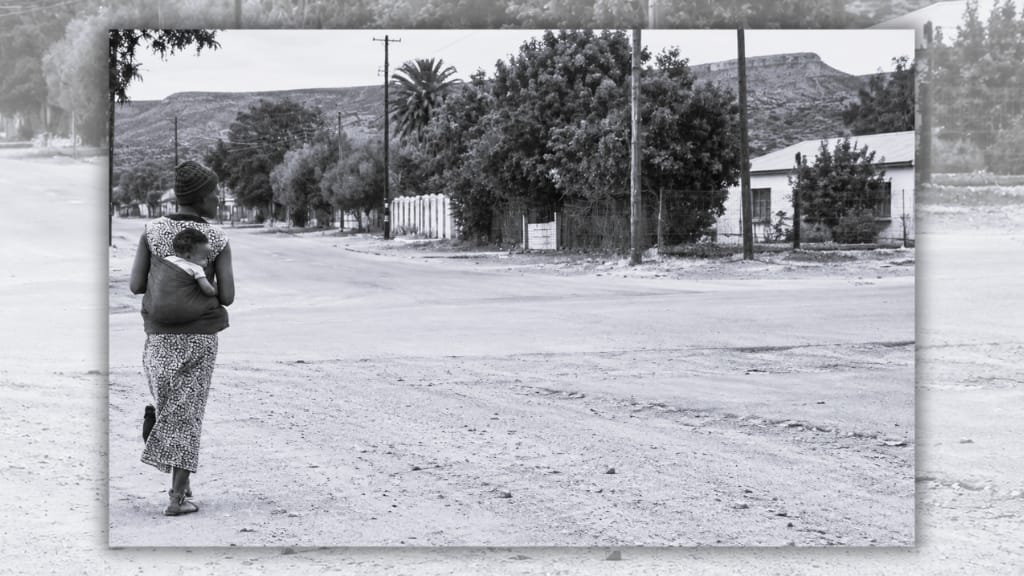
As South Africans support renewed action against gender-based violence, much of the national conversation is focused on the horrifying deaths of women in Ekurhuleni.
Nine women’s bodies have now been found in different parts of the municipality over the past two months. Police have not yet established whether all the deaths are connected, but a multidisciplinary team has been assigned to investigate them.
The discoveries have shocked South Africa and returned us to a familiar cycle: another series of killings, another wave of public anger and another demand that something must finally change. This demand raises an urgent question in the Karoo: if a woman needs to escape a violent home here, where can she actually go?
Distance is part of the danger
Escaping abuse is difficult anywhere. Geography in a remote community is another means of keeping a woman trapped. In November 2025, GroundUp reported that Beaufort West had no formal shelter for women and children escaping gender-based violence. Survivors referred through the provincial Department of Social Development reportedly had to travel nearly 200 kilometres to Mossel Bay to reach the nearest state-funded shelter.
Beaufort West is the largest town and administrative centre of the Central Karoo. If adequate emergency accommodation is unavailable there, what options exist for a woman in a smaller place like Merweville or Murraysburg?
A local Beaufort West resident had begun using her own four-roomed home to shelter women with nowhere else to go. While a generous response to an immediate need, it was also a troubling indication of how easily responsibility for a national crisis can fall on ordinary people with few resources.
Elsewhere, small organisations and safe houses try to fill the gaps. Siya Phambili Safe Haven near Graaff-Reinet, for example, has provided accommodation and support to survivors of gender-based violence. These local initiatives can be lifesaving, but they cannot carry an entire region’s needs without dependable funding and support from the state.
Violence that's difficult to count
South Africa’s first national Gender-Based Violence Prevalence Study found that 33.1% of women over the age of 18 had experienced physical violence during their lifetime. That represents an estimated 7.3 million women. More than 35% had experienced physical or sexual violence.
The numbers are staggering, but even they don't tell us exactly what is happening in the Karoo.
Police crime statistics can show the number of sexual offences and assaults reported at individual stations. They can't show every woman who was too frightened to report, had no transport to the station or believed that nothing would happen if she did.
Nor does SAPS record all gender-based violence under one neat heading. Domestic abuse can appear in the figures as assault or property damage. Economic and emotional abuse often never enter the crime statistics at all.
A small number of recorded cases in a rural police station can't be read as evidence that women are safer. Small towns have their own complications. The police officer taking a statement could know the alleged abuser. The survivor may be related to the social worker or live next door to someone employed at the court. She could fear gossip or retaliation. When everyone knows everyone, asking for help involves making private trauma public.
More than a bed for the night
A rape survivor may need urgent medical treatment, forensic evidence collection, counselling and help opening a criminal case. South Africa’s Thuthuzela Care Centres were created to bring these services together in one place and reduce the additional trauma survivors can experience while moving between police stations and courts.
However, specialist centres are unevenly distributed. The nearest centre is still a journey away for many women in the Karoo. South Africa formally classified gender-based violence and femicide as a national disaster in November 2025. The classification was intended to help coordinate resources and strengthen the response. Its success should be measured in practical terms for rural communities.
Can a woman reach help without having to ask her abuser for petrol money? Can she take her children with her? Is there somewhere safe for her to stay after dark? Will a police vehicle come if she lives on a distant farm? Can she receive medical care without travelling halfway across a province?
What should change in the Karoo?
The Karoo needs a working regional network that could include properly funded safe houses in larger centres, emergency beds in smaller towns, trained victim-support staff at police stations and clear transport arrangements between communities and specialist facilities. Clinics, hospitals, police, courts, schools, churches and welfare organisations need to know exactly where a survivor can be referred and who is responsible for getting her there.
In a crisis, these details determine whether someone leaves an abusive home or goes back to it. National campaigns make violence visible, honour women who have been killed and remind those in power that public anger has not disappeared, but in the Karoo, solidarity is measured by the distance to the nearest shelter and whether a woman asking for help is offered a safe route out.
Where to find help
- GBV Command Centre: 0800 428 428
- Please Call Me service:
*120*7867# - National GBV Helpline: 0800 150 150
- SAPS emergency number: 10111
- Childline South Africa: 116
- Human Trafficking Hotline: 0800 222 777
There is no waiting period for reporting a missing person. A disappearance can be reported to SAPS as soon as someone is believed to be missing.
 Mariana Balt
 Lynette Spencer
 Anchen Coetzee
 Liz Thorne


Comments ()