
Raising children far from cities
In accepting the trade-offs, Karoo families are creating a deliberate future carried forward by children who know where they come from.
🔴 You might also like to read:
 Naomi Roebert
 Naomi Roebert
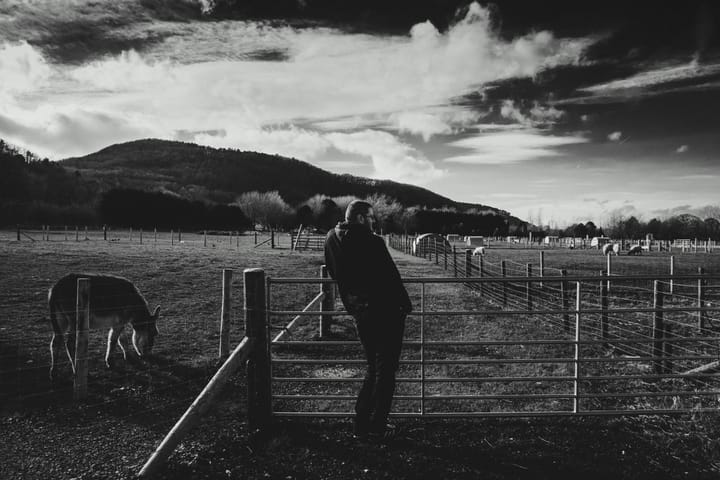
Choosing to raise children far from cities is often as the result of an accumulation of decisions. These could include a job that ties you to the land or family roots that run deeper than opportunity in the city. Whatever the reason, parenting here is different.
Families who stay don't pretend the choice is simple, and they know exactly what they are trading away.
Living with distance
Distance defines daily life in the Karoo. Schools are further apart and specialist doctors require planning and fuel. Sports fixtures involve long drives and children grow up understanding that effort is part of access.
This distance develops a kind of logistical literacy early on. Children learn to pack properly and to wait, and to sit with boredom. Parents become planners by necessity, scheduling appointments, lessons and social time with intention.
Education beyond the classroom
Formal schooling in rural areas is often smaller, sometimes under-resourced and deeply personal. Teachers know families and children are rarely anonymous. This can be both protective and exposing.
Parents supplement where needed, and online resources fill the gaps. Reading becomes a household habit and curiosity is fed through experience as much as curriculum. This approach reflects a broader truth about rural family life: education is not outsourced entirely but is integrated into daily routines and chores.
Freedom with boundaries
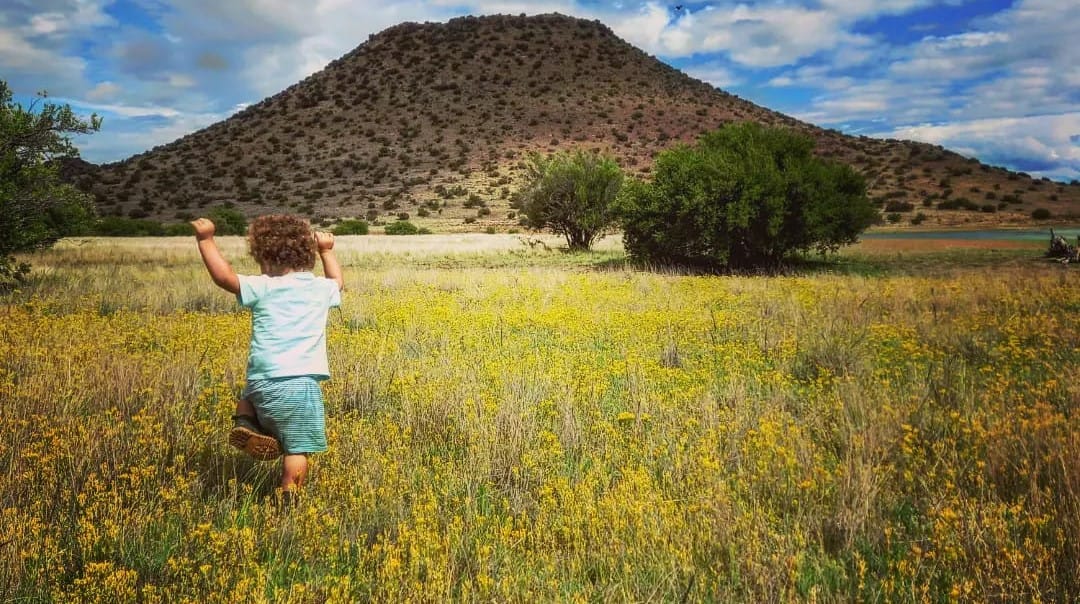
Children in the Karoo enjoy freedoms that would be unthinkable in many urban settings. They roam farms and small towns, climb trees, build forts and spend hours outdoors without supervision hovering overhead.
This freedom comes with boundaries set by awareness. Children learn which animals demand respect and how weather can turn quickly, so that while risk is acknowledged it is not eliminated.
Parents accept scraped knees and dusty clothes as evidence of learning and a day well spent.
Community as a safety net
Children in small towns belong to more than one household. Shopkeepers greet them by name and neighbours intervene gently when lines are crossed. Stories travel quickly, sometimes too quickly, but this visibility also provides protection.
This collective awareness reduces isolation. Children grow up understanding that their actions ripple outward in a place where accountability is immediate and personal. For parents, this network eases the pressure to manage everything alone. In its own way, community fills the gaps made by distance from formal services.
The limits of choice
There are realities Karoo families cannot soften. Limited subject choices at school; fewer extracurricular options; restricted exposure to cultural institutions like museums or theatres.
These constraints take honesty. Parents talk openly with children about what is available. Many families accept these limitations but reconcile themselves to the fact that they will have to live apart as their children grow older, often as one spouse moves to the city while the other manages the land back home. Others commit fully. The Karoo does not offer endless choice, but it does bring clarity.
Shaping values through place
Children raised far from cities often develop a strong sense of responsibility toward land and wildlife. They witness water scarcity firsthand and understand where food comes from.
Many Karoo children grow into adults who notice systems and consequences, who are less insulated from cause and effect. These are the lessons that emerge from living close to the limits.
Technology as a bridge not a replacement
Technology plays a complex role. It connects children to wider worlds through online learning and distant friendships, but it also risks flattening the very qualities that make Karoo childhood distinctive.
Families negotiate these boundaries carefully, and outdoor time remains non-negotiable. More often than not, children choose the outdoors by default. Used well, technology expands horizons without erasing the connection to and the realities of the rural world they live in. Used poorly, it undermines the patience which the Karoo cultivates so effectively.
What families refuse to give up
Despite challenges, there are things Karoo families protect fiercely, like meals together and a childhood lived outdoors.
These families often refuse to trade safety for stimulation or to believe that success requires a proximity to crowds.
Preparing children for wider worlds
A common misconception is that rural upbringing limits ambition. In practice, many Karoo parents focus on equipping their children to move confidently between different worlds.
Children understand scarcity as well as abundance and develop an adaptability through necessity. When they leave, as many eventually do, they carry the Karoo with them as a reference point.
The long view
Raising children far from cities takes real patience. Access and options require creativity and sacrifice, while support systems look different. The Karoo offers something increasingly rare for families who choose this path, such as time to notice growth in a childhood fostered by the environment.
In accepting the trade-offs, Karoo families are creating a deliberate future carried forward by children who know where they come from.
🔴 You might also like to read:
 Naomi Roebert
 Naomi Roebert
Comments ()