
A Karoo story wins on the world stage
Awarded by the Society of Vertebrate Paleontology, the prize marks a historic first: never before has a South African project taken home this honour.
🔴 You might also like to read:
 Naomi Roebert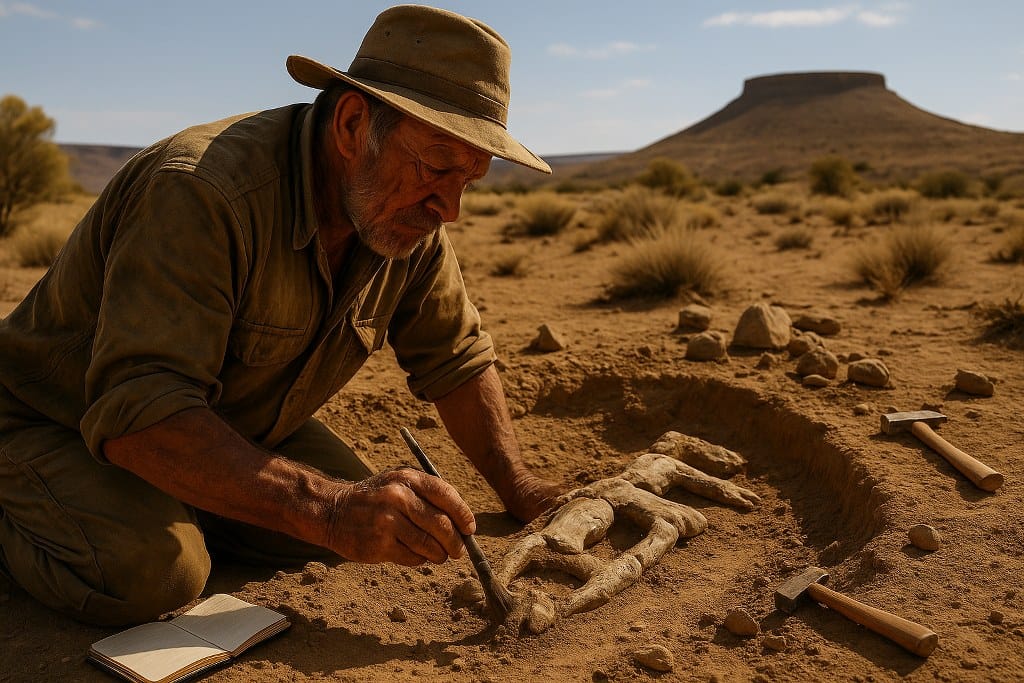
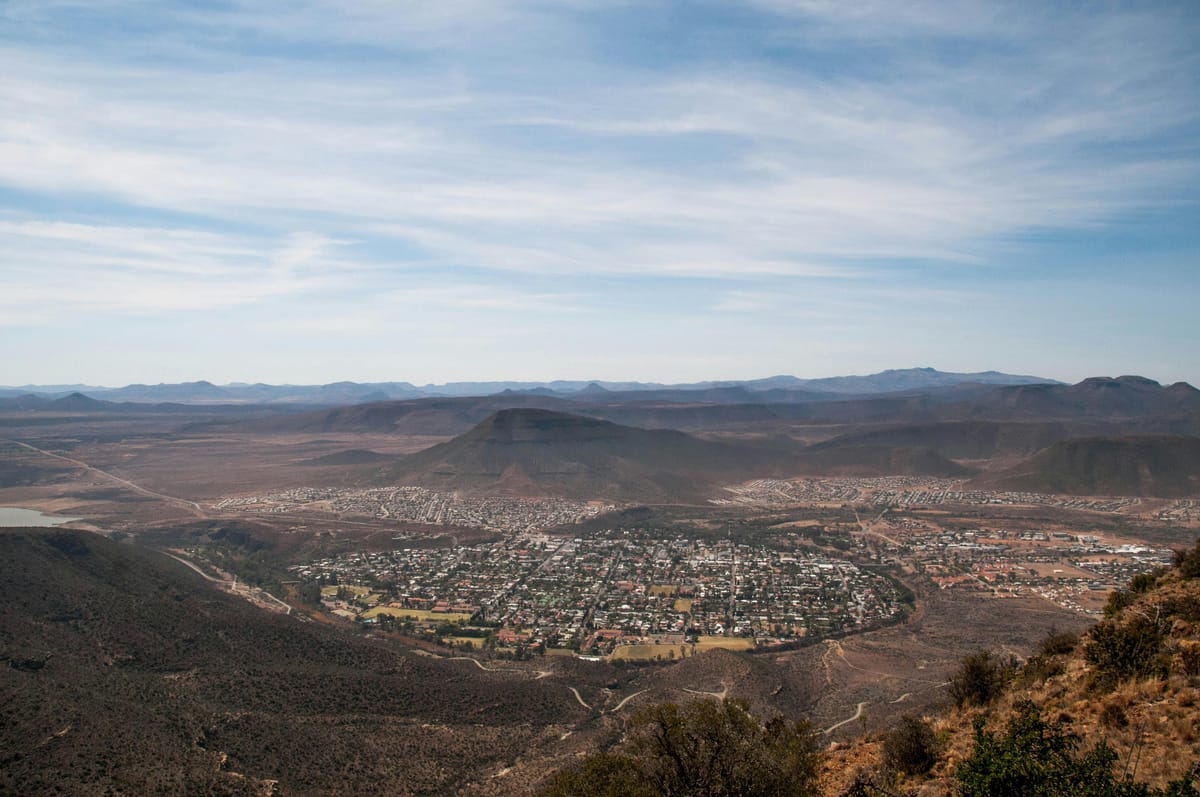
When visitors step into the animated waterhole at Karoo Origins: the Fossil Centre in Graaff-Reinet, they enter a moment in deep time.
Now, that moment has earned international recognition, with Cape Town–based Fancy Horse Studios winning the prestigious Lanzendorf–National Geographic PaleoArt Prize for Digital Modelling and Animation.
Awarded by the Society of Vertebrate Paleontology, the prize marks a historic first: never before has a South African project taken home this honour. For a museum rooted in the Karoo’s fossil-rich soil, the win is a reminder that the region’s ancient stories resonate far beyond its horizons.
Bringing the Permian Karoo back to life
The award-winning work is a six-minute, seamless CG animation set 255 million years ago, during the Permian period - long before dinosaurs, when mammal ancestors known as therapsids dominated the land.
The scene develops around a waterhole, imagined with extraordinary restraint, imparting the sense of watching life play out as it once did in what is now the Karoo. Six species interact within a meticulously researched environment, their movements informed by fossil bones, trackways and comparisons with modern animals.
The imposing Gorgonopsian, for example, appears at life size (nearly three metres long) and moves with a physical logic drawn from studies of lions and Komodo dragons. The result is an unmistakable sense of awe. Fancy Horse Studios led every aspect of the production, from design and scripting to modelling and direction, working closely with local partners Ferin Animation and Sound Foundry.
Crucially, the reconstructions were peer-reviewed by palaeontologists from South Africa, the UK, the USA and Russia, to make sure that the final work reflects the most current scientific understanding of Permian life.
🔴 You might also like to read:
 Mariana Balt
Translating science into experience
For Fancy Horse co-founders Dianne Makings and Colin Payne, the project began with immersion in the Karoo Supergroup’s fossil record, which is one of the richest windows into prehistoric life on Earth.
Guided by leading palaeontologist Bruce Rubidge, the studio set out to translate dense academic research into something visitors could feel as well as understand.
“The Lanzendorf Awards are SVP’s highest awards for artistic achievement,” said SVP President Stuart Sumida when announcing the win. For Fancy Horse, the recognition validates an approach that treats science and storytelling as partners.
“Our goal has always been to make complex ideas feel relatable and alive,” Payne says. “We wanted the work to be beautiful, but also as scientifically accurate as possible. To be recognised by the Society of Vertebrate Paleontology is extremely validating, and a great honour.”
A world-class centre in the heart of the Karoo
Karoo Origins is no ordinary museum. The centre houses 107 holotype specimens from the renowned Rubidge Collection: fossils that have shaped global understanding of the Permian world.
The animated waterhole, believed to be the first permanent installation of its kind anywhere, anchors the centre’s ambition to interpret fossils in ways that speak to contemporary audiences. The collection itself has a story as compelling as the creatures it preserves. It began in 1934, when a child’s question during a family picnic led to the discovery of a 250-million-year-old skull. Decades of careful collecting by the Rubidge family followed, laying the foundations for one of South Africa’s most important palaeontological archives.
For Professor Rubidge, the international award is a source of deep pride. He has described Graaff-Reinet as “the hometown of all mammals, including us”. This is a poetic reminder that during the age of the supercontinent Pangaea, this Karoo town sat near the centre of Earth’s connected landmass.

Looking forward by looking back
Since opening in April, Karoo Origins has welcomed more than 1,100 visitors each month, with numbers expected to grow as word spreads. Beyond its scientific significance, the centre connects ancient extinction events to modern biodiversity loss, encouraging visitors to reflect on fragility and responsibility.
That a small-town fossil centre (and a South African creative studio) should receive one of the world’s highest honours in palaeoart feels fitting. The Karoo has always been a place where deep time lies close to the surface.
Thanks to this award-winning collaboration, those ancient lives now move again, reminding us that the stories beneath our feet are among the most extraordinary we have to tell.
🔴 You might also like to read:
 Naomi Roebert
Comments ()